The state of health care and adult social care in England 2024/25
Downloads
Secondary care
Key findings
- Demand for urgent and emergency care services remains high, but the way in which people are accessing this care is changing. While the volume of calls to NHS 111 reduced in 2024/25, calls to ambulance services have continued to increase, with the volume of hear and treat responses also rising. Attendances at all types of urgent and emergency services have also risen, with the biggest increases at single service facilities for specific conditions and minor injury units.
- People are continuing to face long waits for care in emergency departments. In 2024/25, more than 1.8 million people waited over 12 hours from the time of their arrival to either admission, transfer, or discharge – 169,000 more than the previous year. The number of people waiting for more than 12 hours for an emergency admission to hospital has also risen. These continued waits suggest that the flow of people through hospitals into the community remains challenging.
- The volume of delayed discharges has remained high during 2024/25. When hospital beds remain occupied, the capacity of hospitals to accommodate incoming patients is limited, creating a knock-on impact and maintaining pressure throughout the system.
- Once discharged from hospital, the whole system needs to work together to keep people well. Not doing this effectively can lead to people being admitted to a hospital again. Over the last 10 years there has been a steady increase in the percentage of emergency readmissions, with older people and people living in more deprived areas more likely to be readmitted within 30 days of being discharged from hospital.
- While there has been some improvement, people are still facing long waits for elective care, with the length of waits varying across the country. This is a particular concern for people waiting for cancer treatment where we continue to see that, despite some improvement, services are still struggling to meet national standards.
- Pressures on workforce are continuing to affect the quality of care for patients. Staff have told us about the ongoing strain they feel from persistent understaffing, poor skills mix, and pressure to admit patients despite a lack of capacity and ward beds, which has an impact on their wellbeing and the quality of care patients receive.
Urgent and emergency care
In last year’s State of Care report, we highlighted ongoing concerns that, despite some improvement, urgent and emergency care services were still falling below the expected performance standards. This remained the picture in 2024/25.
Mixed picture for NHS 111
Over 2024/25, there were nearly 20 million calls to NHS 111 – a drop of over 1.8 million calls compared with 2023/24.
At the same time, 3.4% (658,000) of calls to NHS 111 were abandoned (when the caller hangs up at least 30 seconds after they have been queued to speak to an advisor). This is a dramatic fall from the previous year, where 9.8% of calls (over 2 million) were abandoned. However, this still does not meet the abandoned call standard of 3% or less. While some NHS regions achieved a rate of 2.5%, less than half (42%) of providers met the standard in 2024/25.
The length of time people were waiting for their call to be answered also improved, as the national average speed to answer calls was 3 times quicker than that in the previous year (1 minute compared with 2 minutes 58 seconds). However, this is still well below the standard for the average time to answer calls of 20 seconds or less. Over the last year, only 2 out of 19 providers (11%) were meeting the 20-second standard.
As highlighted in last year’s report, when people have to wait a long time for their call to be answered, there’s a risk that they will either:
- abandon the call and not receive advice on appropriate care or treatment
- seek care from a service that cannot meet their needs appropriately, or face delays in receiving the correct care
- not seek treatment at all.
This can lead to delays in receiving appropriate triage and treatment, which in turn can have an impact on people’s outcomes.
Once through to the NHS 111 service, if your symptoms meet the criteria, you will be offered a callback from a clinician, and given a timeframe in which this will happen. Ninety per cent of people who require a clinical callback should receive this within the agreed timeframe. For people who need an urgent callback, this should happen within 20 minutes. While there has been a slight improvement in urgent callback times, with 40% of people receiving a call within the 20-minute standard (up from 31% in 2023/24), it is still well below the standard of 90% or more. In 2024/25, no provider met the 90% standard.
Ambulances still in high demand
Pressure on NHS ambulance services grew again in 2024/25, with 13,376,000 ambulance control room contacts – 283,000 more contacts than in 2023/24. This is an increase in demand of 2.2%.
In the face of these challenges, it is encouraging to note that the average time taken to answer a 999 call for an ambulance has improved in the last few years – from 39 seconds in 2022/23 to 5 seconds in 2024/25. But how quickly calls were answered varied across the country, from an average of 12 seconds in the East of England to 1 second in the North West.
The continued pressure has also meant that ambulance services are still struggling to meet the expected standards for response times to reach a patient. For the most serious category 1 calls, ambulances should respond, on average, within 7 minutes. These are life-threatening events that need immediate intervention and/or resuscitation, such as cardiac or respiratory arrest. In 2024/25, the average category 1 response time was 8 minutes 19 seconds, with only 1 ambulance trust meeting the 7-minute standard. This was slightly faster than in 2023/24, where the average response time was 8 minutes 27 seconds (figure 10).
Figure 10: Category 1 responses by ambulance trusts against standard

Source: Ambulance Quality Indicators
The picture is similar for category 2 calls. These are emergency events that need intervention and/or taking to a hospital, including injuries such as burns, epilepsy or strokes. All ambulance trusts should respond to category 2 calls in an average time of 18 minutes. In response to the ongoing pressure, NHS England introduced an interim objective to respond within 30 minutes, which has been in place since January 2023 (figure 11).
Figure 11: Category 2 responses by ambulance trusts against standard

Source: Ambulance Quality Indicators
In 2024/25, performance for category 2 calls varied across the country. On average only 5 out of 11 ambulance trusts met the interim response time of 30 minutes in 2024/25. Nationally, ambulances took an average of 35 minutes 22 seconds to respond. Across integrated care system (ICS) areas, response times for category 2 calls ranged from 21 minutes 43 seconds to 1 hour 1 minute 57 seconds.
In an emergency, waiting a long time can be extremely frustrating and distressing for people, and can potentially affect their outcomes. In the free text responses to our 2024 Urgent and emergency care survey people told us that this is a particular concern for older people.
In many cases, people who call for an ambulance do not need to go to hospital, with NHS England stating that 1 in 5 people who attend the emergency department don’t need urgent or emergency care. To help people to stay at home, ambulance services also provide the following services:
- See and treat – this is where an ambulance crew responds to a call face-to-face but, following assessment and/or treatment, does not take the patient to hospital.
- Hear and treat – the ambulance service provides advice over the phone to people who do not have a serious or life-threatening condition.
In line with the government’s 10-year plan to move more care from the hospital into the community, since 2018/19 the volume of see and treat responses has increased from 2,471,000 to 2,660,000 in 2024/25 – an overall increase of 8%, but down from its peak in 2020/21 during the COVID period. Hear and treat responses have seen the greatest increase; since 2018/19, the volume of hear and treat responses has almost tripled, from just over 500,000 to over 1.4 million in 2024/25 (figure 12). The London Ambulance Service reported how, for them, providing more hear and treat responses has freed up thousands of hours for ambulance crews, and reduced the time it takes for paramedics to reach the sickest patients.
Figure 12: Ambulance responses 2018/19 to 2024/25

Source: Ambulance Quality Indicators
Joined-up approach to providing urgent care
In November 2023, East Kent launched its new urgent community response service. The integrated service was created following a merger of East Kent’s geriatrician-led frailty hospital at home (virtual ward) and nurse-led urgent community response services.
The service is co-located with ambulance services and hospital providers. Although focused on frailty, it provides care to all population groups. Using the combined skill set of the multidisciplinary team and co-location of staff, they are able to provide an urgent community response, a virtual ward, and a single point of access to a multidisciplinary team that works together to provide the best care pathway for each individual person.
The introduction of the new combined services has:
- increased rates of both hear and treat and see and treat responses
- improved ambulance response times
- increased referrals to urgent neighbourhood services
- reduced acute admissions and bed days.
Source: Nuffield Trust
In June 2025, NHS England published its Urgent and emergency care plan 2025/26, which set out plans to build on the progress made through both hear and treat, and see and treat services. Backed by nearly £450 million additional funding, the plan will enable ambulance services to prioritise the most critical cases while providing alternative pathways for those with less urgent needs.
While there are positive moves to mitigate the pressure on ambulance services, the current levels of demand and pressure are continuing to have a negative effect on the staff. Results from the 2024 NHS staff survey show that ambulance staff continue to report poorer experiences of work:
- 39% said they felt burnt out compared with an average of 30% for all NHS staff
- 39% felt most exhausted at the thought of another day/shift at work compared with an average of 27% for all NHS staff
- 56% felt the most worn out at the end of their working day/shift compared with an average of 42% for all NHS staff.
Pressure on ambulance staff is compounded by the increased risk of abuse and violence they face. In 2024, nearly half (43%) of ambulance staff reported experiencing harassment, bullying, or abuse at work from patients, people using services, their relatives or members of the public in the last 12 months. Thirty-one per cent reported they had experienced violence at work from people using services or their relatives, or the public.
A report published by the Association of Ambulance Chief Executives (AACE) in April 2025 raised concerns about the increasing incidents of violence, aggression, and abuse directed at staff. It reported that in 2024/25, there were 22,536 incidents across the 14 UK ambulance services – an increase of almost 15% on the previous year.
Ambulance handovers
It is important that ambulances are able to transfer people into hospital as quickly as possible after they arrive, as delays can put patients’ safety at risk and affect the quality of care they receive.
In April 2025, Unison published the findings of its survey of ambulance staff on their experiences of waiting times in emergency departments. Of the 588 respondents, more than two-thirds (68%) of ambulance workers reported patients' health deteriorating during long waits, and 1 in 20 (5%) said people had died in their care because of long delays in being admitted to hospital wards.
The standards for the length of time to hand over patients between ambulances and emergency departments are:
- all handovers within 60 minutes
- 95% within 30 minutes
- 65% within 15 minutes.
However, high demand for ambulance services and pressures on urgent and emergency care departments mean that ambulance crews continue to struggle to meet these standards.
The following is taken from an inspection report, which highlights this issue:
Difficulties with discharging ward patients was affecting ambulance handover targets. Patients at [this] hospital had longer ambulance handovers compared to other sites. The ambulance service reported a consistently larger percentage of handovers taking more than 60 minutes at [the] hospital when compared to the average for all hospitals served by the ambulance trust. The percentage of handovers taking more than 60 minutes at the site increased during periods of winter pressure… However, an improved ambulance handover and ‘cohorting’ process was implemented in December 2024 which had started to see a reduction in wait times.
As well as increasing the risk to patients, delays can affect how quickly ambulance crews are able to respond to new emergencies.
In total in 2024/25, there were 4,956,000 ambulance handovers. Of these, 4,712,000 had a recorded handover time as follows:
- 89% within 60 minutes
- 70% in 30 minutes
- 32% in 15 minutes.
From October 2024 to January 2025, average ambulance handover times were consistently worse than in the same period in 2023/24. However, this had improved in spring as average handover times in February and March 2025 were faster than the same period in 2023/24. In 2024/25, the national average handover time was 34 minutes 57 seconds.
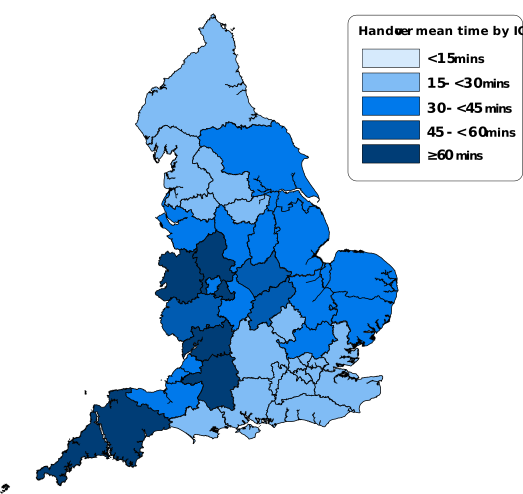
The speed at which people were transferred from the ambulance into hospital continued to vary across the country. At integrated care system (ICS) level, the average handover time ranged from 16 minutes 8 seconds to 1 hour 50 minutes 39 seconds (figure 13).
Figure 13: Handover mean time map by integrated care system (ICS)
Source: Ambulance: Management Information - Response times
People’s concern at waiting in an ambulance may be alleviated by understanding the reason for delays and how long they may have to wait. However, results from the 2024 Urgent and emergency care survey showed that, overall, just under half (47%) of respondents who had to wait in an ambulance were definitely told why they had to wait, with nearly a third (27%) saying they were not kept informed.
Pressure on hospital services
Urgent and emergency care services struggling
In State of Care 2019/20, we reported how the number of people attending emergency departments at the start of the pandemic dropped dramatically. This made it more feasible for hospitals to manage patient flow in a safe and effective way. However, since the pandemic we have consistently raised concerns about the increasing pressure on urgent and emergency care services and the resulting impact on people who need to use these services.
For example, on one recent inspection of a type 1 urgent and emergency care service, we noted that capacity constraints and patient flow across the hospital meant that people couldn’t always get care, treatment and support quickly enough. Attendances had increased in 2024, and the full capacity protocol was used 99 times in the last year.
In England, there are 3 main types of urgent and emergency care services:
- type 1 – consultant-led 24-hour emergency departments with full resuscitation facilities and patient accommodation (also referred to as accident and emergency (A&E) or casualty)
- type 2 – consultant-led single service facilities for specific conditions, for example eye conditions or dental problems, and patient accommodation
- type 3 – GP-led urgent treatment centres, also called minor injury units.
Following the drop in attendances in 2020/21, there was an upsurge in attendances at all (type 1, type 2 and type 3) urgent and emergency care services, though this was still lower than before the pandemic. This upward trend in attendances has continued over the last 4 years, increasing by 12% (3 million):
- 24.4 million in 2021/22
- 27.4 million in 2024/25.
Looking at attendances at urgent and emergency care services over time, in line with the increase in overall numbers of attendances, there has been a corresponding increase in the rate per 100,000 population. From 2021/22 to 2024/25, attendances per 100,000 grew by 8% from 43,100 to 46,700 (figure 14).
Figure 14: A&E attendance percentage increase from 2021/22 to 2024/25, by count and rate per 100,000 people

Source: A&E Attendances and Emergency Admissions - Quarterly Annual Time Series
Levels of demand vary across age groups. In last year’s State of Care, we highlighted how attendances by children significantly increased following the COVID period and into 2022/23, though they did fall in 2023/24. From 2021/22 to 2024/25, the greatest percentage increase in attendances at urgent and emergency care services was in adults aged between 65 and 79 (up by 20.5%), and in adults aged 80 to 89, which increased by 18.6%, compared with 2021/22 (figure 15).
Figure 15: Attendances at urgent and emergency care services by age group, 2021/22 to 2024/25

Source: Hospital Accident & Emergency Activity 2024-25
As in previous years, demand also varies across the country, with people in more deprived areas more likely to attend urgent and emergency care services.
The number of attendances continues to rise across all 3 types of urgent and emergency care services. However, since the pandemic we have seen a shift in the way people are accessing these services, with the greatest growth seen in type 3 services. In 2024/25, attendances at type 2 services grew by 11% (59,000 additional attendances) and attendances at type 3 services grew by 8% (750,000 additional attendances) from the previous year. This compares with a 1.4% growth in attendances at type 1 services (237,000 additional attendances).
We have also previously raised concerns about people not being able to get the care they need from primary care and other services, which adds to the pressure on urgent and emergency care. As part of our analysis for this year’s State of Care, we interviewed more than 20 patients to explore their experiences of the urgent and emergency care pathway. While it was not always clear whether the attendance could have been avoided, for some patients a lack of responsive and effective care in the community continued to be a reason why they had sought urgent care.
The results from the 2024 Urgent and emergency care survey also suggest that a lack of timely access to other services may still be contributing to unnecessary attendances at urgent and emergency care services.
This survey found that two-thirds (66%) of respondents who visited an emergency department (type 1) and 50% of respondents who used an urgent treatment centre (type 3) said they had contacted another service first. Where respondents had contacted another service first, they were most likely to have contacted NHS 111 or their GP.
Of the 34% of respondents who went to the emergency department first, 26% said they had not gone to another service first because they wanted to be seen on the same day. In addition:
- 16% said ‘my condition was life threatening’
- 20% (1 in 5) said they did not think their GP would be able to help
- 41% (4 in 10) said that they thought they might need a test.
While other options are available, this could suggest that people feel they need to go to an emergency department in order to be seen on the same day.
Long waits for urgent and emergency care
Recent figures from the Office for National Statistics (ONS) highlight the importance of people being seen promptly on arrival at urgent and emergency care services. The data, published in January 2025, shows that patients who wait in the emergency department for more than 2 hours have an increased risk of death. This risk continued to increase the longer patients waited beyond 2 hours.
The NHS Constitution pledges that people should wait no longer than 4 hours in urgent and emergency services from arrival to either admission, transfer, or discharge. However, results from the 2024 Urgent and emergency care survey show that people are continuing to face long waits for care, with nearly two-thirds of people (64%) saying their visit to the emergency department lasted more than 4 hours. Nearly a third (29%) reported that they were in the emergency department for 8 hours or more.
Long waits, which we see mostly in type 1 emergency care services, are reflected in performance data from NHS England. On average in 2024/25, people waited under 4 hours in 74% of attendances across the 3 main types of urgent and emergency care services. Waiting times were longer for type 1 services, where only 59% of attendances were under 4 hours. In both cases, the figures are below the current temporary target of 78% and well below the 95% target set out in the 2010 operational standards.
We’ve heard directly from people about the impact of such long waits through our Give feedback on care service:
[At] our visit to the new emergency department … [in] January… we were there for 12+ hours … 9 hours of that my partner hadn't been seen by anyone not even obvs, she was very tachycardia.
Recent research from the Royal College of Emergency Medicine (RCEM) has revealed how older people (aged 60 and over) are more likely to experience a long wait in the emergency department. It shows that last year more than a million older people faced waits of 12 hours or more in emergency departments in England.
Analysis of free text responses to our 2024 Urgent and emergency care survey highlights the impact of these long waits and the additional consequences on older people and people who are frail. We found that older people were often disorientated and had a profound sense of helplessness during extended waits for urgent care services:
At [a very old] age she was kept waiting 6 hours plus. In the end she was tired and hungry and we took her home without treatment. She was taken to … hospital 2 days later and diagnosed with an eye stroke. I feel to keep someone of that age waiting 6+ hours is unforgiveable.
They were muddled in some of their explanations and we ended up waiting longer than necessary because medication hadn’t been given. As an elderly patient who hadn’t had much sleep, this made the experience more challenging.
A personal story: Long wait for urgent care
Fiona told us about her father’s experience of being admitted to hospital following a fall at home.
Despite having a number of hip and shoulder operations over the years, Robert, who is 87 years old, was still very active and able to live an independent life. In 2024, Robert started to have minor falls and accidents at home. Unfortunately, one day he ended up having a more serious fall at home and dislodged his hip.
Fiona called for an ambulance as Robert was in agony. He was taken to their local emergency department at around 6pm and seen quickly. However, due to a lack of available beds on the wards, he was pushed to a corridor at the back of the emergency department. There was little or no communication as to how long it would take to find him a bed and when he would be having an operation to put his hip back into place. He was just left there.
Fiona stayed with her father and got him water. She needed to return home and expected that he would be moved onto a ward. When she left at 3am he was still not on a ward. Her father wanted to go home with her; he didn’t understand what was happening and why he wasn’t being moved. Fiona went home to get some clothes and when she returned to the hospital, she found her father was still in the same place. They were given no information about when he would move or when he would be having his minor operation to put his hip back in place.
The staff had occasionally checked his blood pressure and offered him some food once, but there was no reassurance that a bed would be found. While she understood that nurses and doctors are overworked and underpaid, often working with low resources, Fiona felt that a little reassurance and compassion for her father would have helped her feel much better. It was very stressful for him and upsetting. He was in a lot of pain and, mentally, it was not good for him to be under the stress of not knowing what was about to happen and just being left out in a corridor.
The next morning, they told him they would operate on him that same day. After the operation he was on the ward for recovery. Once he was in the ward he was comfortable and they cared for him and they were very kind and brilliant. He left the hospital after 2 days on the recovery ward with his intermediate care package in place.
Robert has recovered well and is in a much better mental state. However, following his experience he is scared of going back into hospital.
(Interview with member of the public)
While not an inevitable consequence of ageing, frailty is more common among older adults. The British Geriatrics Society states that any interaction between an older person and a health or social care professional should include an assessment that helps to identify whether the person has frailty. As part of its Care of Older People Quality Improvement Programme, the RCEM shows that between 4 October 2023 to 3 October 2024 just over half (56.27%) of older people attending emergency departments were screened for frailty.
Through our inspections of urgent and emergency care services, we have found examples of services that are working to address the specific needs of older patients attending emergency departments.
For example, in an inspection of an urgent and emergency care service, we saw evidence of different teams working together to improve care for older people:
During our inspection, we heard feedback about joint working between the medical services team and the urgent and emergency care team at another NHS hospital. There was joint working with the frailty team to review frail patients who attend urgent and emergency care services by ambulance. Patients with a high frailty index score may deteriorate quickly, so the frailty team could work as an admission avoidance service. The frailty service was co-located in the emergency department. A project had also been undertaken with the service’s pharmacy team to improve timely dispensing of medicines for discharge.
But exceeding the 4-hour wait target in urgent and emergency care is only part of the picture. Since February 2023, NHS England has published figures showing how many patients have to wait more than 12 hours from arrival to either admission, transfer, or discharge. These show that in 2024/25, 1,809,000 people waited over 12 hours from the time of their arrival; this is 169,000 (10%) more than in 2023/24.
During our inspections, people have told us about experiencing long waiting times in an emergency department:
When we arrived at one emergency department, the longest waiting time for a bed or admission was 22 hours at 10am. A larger percentage of patients at the hospital were spending more than 12 hours in the emergency department compared with other sites in the region and nationally.
At another inspection, most patients we spoke with told us they had experienced long wait times while in the emergency department. After the decision to admit had been made, some waiting times were in excess of 40 hours.
The number of people who need to be admitted to hospital after attending an urgent and emergency care service also continues to increase. In 2024/25, 4.87 million people needed to be admitted to hospital from the 3 main types of urgent and emergency care services – over 90,000 more than 2023/24 and over 200,000 more than in 2021/22.
Before 2022, long waiting times for admission to hospital were rare. While admissions through urgent and emergency care services have only increased by 5% since 2021/22, people are facing much longer waits to be admitted. Data from NHS England shows that 532,500 (11%) people waited for more than 12 hours in 2024/25, increasing from 98,600 (2%) in 2021/22 (figure 16).
Figure 16: Number of people waiting over 12 hours from decision to admit to admission

Source: A&E Attendances and Emergency Admissions - monthly data
People’s feedback through our Give feedback on care service highlights the additional strain this puts on emergency departments and the impact on people:
My mum spent 2 days in A&E waiting for a bed on a ward. During that time I saw that there were clearly not enough staff, resulting in a 1 hour wait for a commode and my mum subsequently wetting herself. At one point there were not even enough commodes to meet patient needs. Whilst some staff on A&E were kind, there were some who were rude and bordered on aggressive.
Providing care in inappropriate spaces
The ability to move people out of the emergency department is affected by how many beds a hospital has available on the wards. To be able to manage variations in demand and ensure that patients can flow through the system, NHS operational guidance recommends that no more than 92% of beds should be full at any one time. However, the Royal College of Emergency Medicine (RCEM) recommends that hospitals should define thresholds for occupancy, and justify if they exceed 85%.
The average occupancy levels of general and acute beds have continued to sit at 93% during the last 3 years, rising to 94% over the winter months. The number of general and acute beds has steadily increased over the last few years from an average of 95,000 in 2021/22 to 102,000 in 2024/25, a rise of 7.4%. While the total number of beds has continued to increase, over the last 3 years it has only been keeping pace with the growth in population, meaning that capacity remains tight.
A lack of available beds not only increases delays in emergency departments, but can also lead to patients being placed in inappropriate settings. Through our Give feedback on care service, people have told us of instances in which they, or a family member, had to wait to be seen and/or treated in side rooms, which offered little or no privacy, or of being left on trolleys in corridors for hours on end without any interaction with medical staff.
Results of the 2024 Adult inpatient survey showed that of the people who had to wait to get a bed on a ward, people were asked to wait in the following locations:
- treatment bay (46%)
- corridor/hallway (18%)
- storage room/cupboard (1%)
- waiting room (31%)
- somewhere else (10%).
Older people in this situation are particularly vulnerable due to their increased risk of frailty. In the free text responses to the 2024 Urgent and emergency care survey, frail older respondents were highly critical of the care they experienced in inappropriate settings, though they did acknowledge the dedication and patience of staff:
… waiting on a corridor on a trolley for more than 24 hours. This is particularly harrowing for an elderly, poorly person. This seems to be the norm at [hospital] and we have witnessed other patients waiting on trolleys suffering and totally neglected.
...I decided that instead of having to go through the horrors of spending three nights on the corridors of [hospital] I was prepared to die.
…sometimes I was left on a trolley by the doctors and nurses’ desk as not enough cubicles were available. Doctors and nurses were forced to shuffle patients in [and] out of cubicles to examine them. Due to my age and health conditions I was at risk of contracting infections, but was placed by another patient with breathing difficulties that was possibly COVID, to which I later caught during my attendance.
This was echoed in comments received through Give feedback on care, where staff and people told us their concerns about people being cared for in hospital corridors:
Corridor care is putting patients across the wards at risk, for example, an unexpected death occurred recently which, if investigated properly, will show that the patient’s obvious deterioration was not escalated and an opportunity to intervene earlier was missed.
Corridors full of people on stretchers. No beds. Patients who have been waiting for over 12 hours have not been offered any water or food. [A] woman with broken hip [has] been waiting on a stretcher for over 8 hours so far. Over 45 patients for 2 nurses.
A June 2024 report from the Royal College of Nursing raised concerns about the impact on patients of care in inappropriate settings. Based on a survey of 11,000 nursing and midwifery staff, the report found that nearly two-thirds of nursing staff (63%) were worried that patients were receiving unsafe care, with 67% of respondents saying that corridor care was compromising patients’ privacy and dignity.
Concerns around the use of inappropriate spaces are not new. In 2018, we published Under pressure: safely managing increased demand in emergency departments. This found that, despite clear guidance to NHS trusts that it is not acceptable to use inappropriate spaces, many hospitals were routinely using inappropriate spaces with no plans in place for alternative, safer accommodation.
We are continuing to see the same issues arising on our focused inspections of the urgent and emergency care pathway. We have made it clear in our guidance to trusts that the use of inappropriate spaces is not acceptable. Patients should receive safe and effective care in an environment that allows for their privacy and dignity to be protected, and that ‘corridor care’ must not become normalised.
However, the results of the 2024 Adult inpatient survey show that in some cases the short-term use of temporary escalation spaces to relieve pressure across the urgent and emergency care pathway is a reality. As recommended in our Under pressure report, trusts need to make a trust-wide assessment of the safest places to care for any patient, taking into account the physical environment but also the staffing available. Patients should not be cared for in unsuitable spaces such as emergency department corridors, or in ambulances on the hospital forecourt. Trusts also need to have agreed metrics for measuring capacity in the emergency department, which can then be used to manage crowding and monitor against hospital resources, for example bed capacity.
The length of time spent in hospital can also have an impact on people, with unnecessary stays in hospital linked to worse health outcomes. The proportion of people staying over 7, 14 and 21 days has remained similar to 2023/24, with patients staying over 7 days accounting for half of all adult general and acute hospital beds (47,600 out of 90,600). Almost a third of adult patients (28,200) stayed in hospital over 14 days, and 1 in 5 (18,400) stayed over 21 days.
A 2015 report by the Nuffield Trust highlighted how reducing the length of time that people stay in hospital could help to manage demand for beds and flow through hospitals. NHS England has recognised this, with the NHS Long term plan and 2024/25 NHS operational guidance both committing to reducing the length of hospital stays.
However, we recognise the challenge for hospitals in ensuring patients are well enough to return home. As highlighted in our section on discharges, if people are discharged too soon it can lead to them being readmitted at a later date.
Challenges with hospital discharges
Patients who have long hospital stays (3 weeks or more) tend to be in poorer health and may need more support when they are discharged. In its May 2025 Quality Watch, the Nuffield Trust reported that discharge delays, where a person has not been discharged from hospital despite being assessed as being medically fit to leave, is one of the biggest challenges facing the NHS.
Latest figures from NHS England suggest that, after a substantial increase in 2021/22 and into 2022/23, the volume of patients who were medically ready to be discharged but remained in hospital has stayed stable over the last 3 years. On average, this meant there were 12,660 patients each day in 2024/25, compared with 12,690 in 2023/24 and 13,230 in 2022/23.
The high volume of delayed discharges also highlights a lack of substantial improvement in patient flow out of hospitals to more appropriate care settings. This in turn maintains pressure across the wider health and care system, as hospital beds remain occupied, limiting capacity for incoming patients and creating knock-on effects throughout the system.
On average, in March 2025 nearly 6 in 10 patients (58%) who were medically ready to be discharged on a given day experienced a delay. This varied across the regions, from 44% in the East of England to 66% in the North West in the same period. As highlighted in our section on adult social care, issues with capacity within care homes or home care services as well as bed-based rehabilitation, reablement or recovery services, risk exacerbating these delays.
We commissioned research with National Voices, in which people were asked about their experiences of the discharge process. On the whole, people reported having a positive experience when it came to being discharged from hospital and receiving follow-up care in the community, with the majority of respondents to the questionnaire saying that they were happy with where they were discharged to.
However, some people described how issues such as discharge delays, a lack of co-ordination, or a breakdown in communication during the discharge process left them feeling confused and unhappy.
One interviewee who had negative experiences of being discharged from hospital described how they were told they were ‘bed blocking’ and so were being discharged regardless of whether they felt ready to leave.
The doctor who I hadn’t seen had a look at my notes and deemed me fit for discharge, at which point a physio came along and introduced me to a pair of crutches and said we’ve got to go down to the end of the ward and do the stairs[...] I couldn’t manage the crutches, I was going in different directions, totally unsafe, so she dumped me in a wheeled commode.
[Interview participant]
People described how an inadequate discharge process can also have an impact on emotional wellbeing, leading to a sense of frustration and/or heightened anxiety. One interview participant who eventually went on to have a good experience of follow-up care described how a poor experience during her hospital stay and discharge process left her feeling dehumanised.
Two days after [discharge] a physio and a paramedic [came to see me]. The paramedic was doing the job of the [occupational therapist] and the nurse. The community physiotherapist actually burst into tears when she started talking to me because [I said that I] actually felt seen and I felt heard as a human being rather than a lump of meat, which is what I had felt for most of the time in hospital.
[Interview participant]
The research we commissioned from National Voices found that a poor discharge experience can be damaging for people who are more at risk of experiencing health inequalities as it can lead to exacerbating poor health outcomes.
This is supported by evidence from the 2024 Urgent and emergency care survey, which showed that frail older people are particularly affected by poor discharges. This can have a detrimental effect on their recovery, potentially exacerbating existing health issues and making them more severe and long-lasting. Poorly planned discharges can sometimes lead to increased risk of harm, or unplanned readmissions, as is illustrated through this experience from Give feedback on care:
I am writing this on behalf of … [my] brother-in-law. He has cerebral palsy and is non-verbal and severely disabled. His sister and I accompanied [my brother-in-law] to A&E on 2 consecutive days. Day 1 he was taken to A&E by ambulance after a fall caused by a serious infection affecting his mental awareness. After spending 12 hours in A&E (overnight) he was discharged, despite our concerns that he was too unwell. Day 2 after being home for 2 hours it was obvious to us that he should not have been discharged. We took him straight back to A&E and spent another 20 hours there (overnight again) before he was finally admitted as an inpatient. He was discharged 12 days later. A terrible traumatic experience for an elderly, disabled man.
People needing emergency readmissions
Once discharged from hospital, the whole system needs to work together to keep people well. Not doing this effectively can lead to people being admitted to a hospital again.
Data from NHS England shows a steady increase in the percentage of emergency readmissions over the last 10 years. In 2023/24, the latest data available for a complete year,14.8% of all emergency admissions were for patients who had been previously discharged from a hospital within the last 30 days.
The older a patient is, the more likely they are to be readmitted to a hospital within 30 days of the most recent discharge. The highest proportion of readmissions for this measure has consistently been people aged 75 and over, with 17.9% patients readmitted within 30 days of their most recent discharge in 2023/24 (figure 17).
Figure 17: Percentage of cases in which the patient was admitted to a hospital within 30 days of the most recent discharge by age group

Source: Compendium - Emergency readmissions to hospital within 30 days of discharge - NHS England Digital
People living in the most deprived areas of England are also more likely to be readmitted to a hospital within 30 days compared with the national average.
People waiting for hospital care
More people needing diagnostic tests
Diagnostic activity forms part of over 85% of clinical pathways. The NHS Constitution states that this should happen in less than 6 weeks after being referred. This is important, as a prompt diagnosis can save lives, saves time and money, and can prevent conditions from getting worse.
Since 2008/09, the average number of tests carried out for people on the waiting list has doubled. However, as we highlighted in last year’s State of Care, waiting lists have continued to grow, rising nearly fourfold over the same period. In 2024/25, the average number of people waiting for a test rose by just over 36,000 to 1,627,000 from 1,591,000 in 2023/24. This suggests demand for diagnostic tests continues to increase.
Strain on diagnostic services has also been exacerbated by an increase in unscheduled diagnostic tests, with the number of unscheduled diagnostic tests increasing from an average of 478,000 to 520,000 per month over the last year.
Long waits for planned treatments
According to The King’s Fund, waiting times for hospital treatment consistently rank as one of the public’s main concerns, and have a big impact on patients’ experiences of the NHS.
Furthermore, the Nuffield Trust highlights that waiting a long time for treatment can have detrimental effects on patients. It can result in worse prognosis, a need for more complex surgery, increased medication, and a slower process of recovery. This is supported by the results of our 2024 Adult inpatient survey, which found that 43% of elective patients said their health deteriorated while waiting to be admitted to hospital.
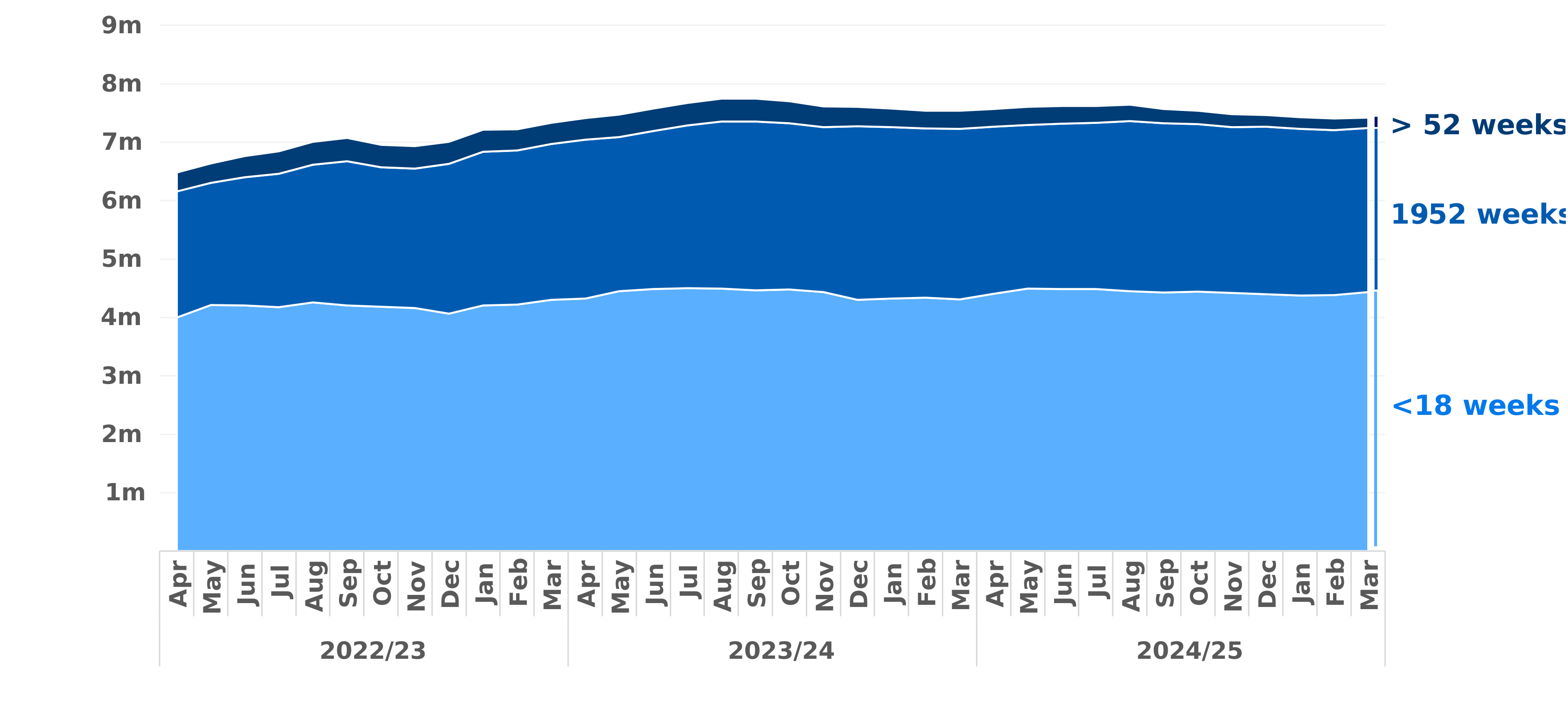
During the COVID pandemic, the number of people waiting for elective treatment grew substantially. As we reported last year, between March 2019 and March 2024, waiting lists for elective care increased by almost 80% (from almost 4.2 million to just over 7.5 million people). As at March 2025, this had reduced to 7.42 million people waiting for treatment, and stood at 7.37 million by June 2025.
The length of time people have to wait for treatment following referral from their GP or consultant, or through the emergency department, is known as ‘referral to treatment time’. In this period, the patient may undergo diagnostic tests and scans, have medicine or therapy prescribed, or have their referral revised.
The NHS Constitution states that 92% of patients should wait no longer than 18 weeks from referral to treatment. The last time this standard was met was in February 2016.
To tackle this issue, in January 2025 NHS England set out its commitment to meeting the 18-week standard by March 2029 in its Elective Reform Plan. It also set out a midterm commitment to ensure 65% of waits were under 18 weeks by March 2026. As at March 2025, 59.8% of patients had been waiting 18 weeks or less. While this positive upward trend has continued into 2025/26 (61.5% in June 2025), it remains to be seen whether the March 2026 commitment is achievable (figure 18).
The number of people on the waiting list for more than a year increased from 1,150 (0.03% of the waiting list) in March 2019 to 180,000 in March 2025 (2.4%). While respondents to the 2024 Adult inpatient survey were generally still positive about their experience of how long they had to wait before being admitted to hospital, 42% of people felt that they had to wait too long.
Figure 18: Total number of active referral to treatment pathways by waiting time
Source: Statistics » Referral to Treatment (RTT) Waiting Times
The proportion of people waiting 18 weeks or less varies between types of services. As of March 2025, no service type met the standard of seeing 92% of referrals in 18 weeks. However, 8 service types met the midterm standard of seeing at least 65% of referrals in 18 weeks, with elderly medicine service performing best at 81.3%. Oral surgery was the poorest performing service with 50.7% of waits of 18 weeks or less in March 2025.
NHS England has recently published a demographic breakdown of people on the elective waiting list at the end of July 2025. This shows that the proportion of people waiting for 18 weeks or less varies by age, with the shortest waiting times for those in the over 65 group (63.5%), compared with 59.3% for young people aged 0 to 18 years, and 58.1% for people aged 19 to 64 – a gap of 5.4 percentage points from best to worst. This pattern is largely followed at the integrated care system (ICS) level, though for some ICSs the gap between the age groups is much larger. In one ICS there is a gap of 16.9% between those with the longest waits (51.6% of young people aged 0 to 18 waiting 18 weeks or less) and the shortest waits (68.4% of people over 65 years).
While waits of 18 weeks and over for young people aged 0 to 18 are lower than some, they are still too high. In January 2025, a group of children’s charities and medical organisations, including the Royal College of Paediatrics and Child Health and NHS Providers, published a joint statement calling for urgent action. Noting the pending introduction of the NHS 10-year plan and the focus on prevention, the statement highlighted how early intervention in childhood is central to ensuring a healthier future for everyone, and the need for greater investment in childhood services.
Where people live in England continues to affect how long they have to wait. In 2024/25, no ICS achieved the 92% standard for waits of 18 weeks or less. In the same year, 8 out of 42 ICSs met the 65% midterm standard at least once in the 12 months, compared with 6 in 2023/24. The proportion of people waiting 18 weeks or less varied from 70.2% to 50.8%.
The recently published demographic breakdown of those on the elective waiting list also highlights differences based on the level of deprivation where people live. The proportion of people waiting for 18 weeks or less in the most deprived areas is 59.2%, compared with 60.9% for the least deprived – a gap of 1.8 percentage points. Again, this varies more at an ICS level, with a gap for one ICS of 10.2 percentage points.
People told us their experiences of waiting for elective care through our Give feedback on care service. They described often having trouble making appointments and waiting a long time before actually being seen. People also told us that appointments were often cancelled and/or re-scheduled at short notice, often with little or no explanation as to why this had happened.
For example, one person said his appointment had been made and cancelled on 4 separate occasions. Not only did this create concerns around his health status, it also affected his working life as he had to negotiate time off to attend appointments that were then cancelled.
… my mother … is under the care of vascular surgery. She has not been given an appointment in over 2 years; over this time they have cancelled 5 appointments without giving any reason. Despite the fact she is a high-risk patient with chronic circulatory issue in both legs. Her GP has re-referred her to help get her seen, but again the appointment was cancelled without any indication of another appointment being offered. This was nearly 3 months ago and still no appointment has been offered for the cancelled appointment.
I have been referred back to audiology because my hearing impairment has changed. Even with my hearing aids I find hearing what people are saying tricky. I am fit and well otherwise and I continue to work full time as a teacher. The classroom environment with young children is often noisy and I depend on my aids so that I can continue to work. I was referred back to [the hospital] in January. My letter said that if I didn't hear from audiology by 22nd June to ring. This I did and was told there was an 18-month wait to be seen. I feel this is far too long and that in reality this service is being run down forcing people to turn to private hearing aid providers. I feel very strongly that, particularly in my circumstances, maintaining quality hearing in older people is critical. In my case, clear hearing means I can continue to work, but I understand that there is recent research that shows good communication skills, including hearing help to thwart dementia. It also stops social isolation.
Care and treatment for cancer
In our 2 previous State of Care reports, we have highlighted our concerns around the length of time people have to wait for referrals for cancer tests, as well as delays in starting treatment. While there has been some improvement, in many cases performance is still not meeting standards.
NHS guidelines state that 75% of people should have a diagnosis of cancer or have cancer ruled out within 28 days of being referred. Last year, we reported seeing some improvements in performance against the 28-day faster diagnosis standard.
This has continued into 2024/25 where, except in 3 areas, average performance has improved in all integrated care system (ICS) areas. The average national performance for the year was 76%, with 85% of cases meeting the 28-day standard in the best performing ICS area. Average performance in the worst performing area was 67% which, although below the standard, was still a 7% improvement from the previous year.
However, the picture is less positive for people who start treatment after being diagnosed.
Ninety-six per cent of people should have their treatment started within 31 days of a decision being made to treat their cancer. Last year, we reported that the 31-day standard had not been met nationally in the period we reviewed. This year, we have continued to see a struggle to meet the national standard, with only 9 ICS areas meeting the standard at least once in 2024/25. This is an improvement from the previous year, where only 5 out of 42 ICSs met the standard at least once in 2023/24.
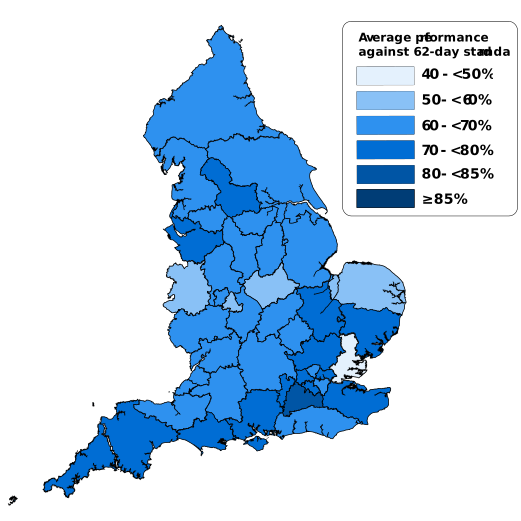
For those with an urgent referral, 85% of people should have treatment started within 62 days. Last year, we reported that performance against the 62-day standard is poorer than the other targets. While there has been improvement in performance in 37 out of 42 ICSs in 2024/25 compared with 2023/24, the standard was not met nationally, and no ICS area met the standard in 2024/25. Performance varied widely, ranging from 80% of cases seen within 62 days in the best performing ICS area to 49% in the worst performing areas (figure 19).
Figure 19: Average performance against the 62-day standard from an urgent referral to the first treatment for cancer in 2024/25
Source: Statistics » 2024-25 Monthly Cancer Waiting Times Statistics
As highlighted by Cancer Research UK, cancer that is diagnosed at an early stage, when it isn’t too large and hasn’t spread, is more likely to be treated successfully. In 2019, the NHS Long Term Plan set out an ambition that by 2028, 75% of all cancers will be diagnosed early (stage 1 and 2). The latest available data from 2022 showed that 53% of cancers were diagnosed early at stage 1 or stage 2.
Respondents to the survey carried out by the Nuffield Trust reported a mixed picture of progress against inequalities in early cancer diagnosis. While 17% reported ‘significant progress’ in this area, 39% reported ‘very little’ or ‘no progress’ (31% ‘very little’ progress, 8% ‘no progress’).
People who wait a long time for care and treatment for cancer continue to speak to us about the negative consequences it has on their lives. Waiting a long time for test results and diagnoses means that the quality of life for some people is severely diminished due to uncertainty and fear, especially when communication with care providers is difficult or unpredictable, and there is a lack of emotional and practical support.
Some people have told us how long waits for diagnostic tests means that their chances of making a recovery have been badly affected. In a few cases, people tell of missed signs and wrong diagnoses leading to delayed or missing care. When people do receive care, some find that their care is not joined up between different parts of the system, leading to miscommunication, confusion, missed treatments, and ultimately poorer outcomes for people with cancer and their loved ones.
Quality of care for people in hospital
Patients consistently tell us that their experience with staff is key to their experience of healthcare. Most respondents to our 2024 Adult inpatient survey had a positive experience in their interactions with doctors and nurses, such as being treated with respect, dignity, kindness, and compassion. However, overall, the survey shows that people’s experiences of care have become less positive since 2020.
This is supported by analysis of our Give feedback on care submissions, which highlights concerns around the quality of the care people received and the attitude and behaviour of staff.
In some cases, people were worried that staff were not meeting people’s basic care needs:
My concerns are that my Mum is not proactively getting her basic care needs met so that she is deteriorating to an extremely poor state. She is cold and dehydrated and the ward staff are not doing anything about it.
I am worried that my family member is not getting the care they need. If the ward carries on the way it is, a patient could be seriously injured or worse. A fatality may happen. This needs to be addressed immediately.
There were also concerns that the lack of adequate monitoring of patients, particularly older and frail people, compromised their safety. For example, we heard of people being left in wet and/or soiled clothing for extended periods. Not only does this increase the risk of infection, but it also has a negative impact on the dignity of the person concerned, as the following experience shows.
Laying in own urine and faeces. Family called at 07.52am and found patient still laying in his own urine and excrement at 11.30am upon visiting. When family have been present to alert staff to his double incontinence the call bell goes unanswered; daughter timed 15 and 22 minute delay and the latter was answered by a [healthcare assistant] who was very rude towards patient unaware family on FaceTime call to him. Patient called as he was in significant pain writhing on bed. Distressing to see by family.
People also described being concerned about the knowledge and competency of some of the medical staff who were taking care of them, which they felt could be detrimental to patient safety:
I also got the impression staff have limited knowledge on physical health of the mother, they had knowledge of foetuses and babies but when I raised concerns about my own physical health I was dismissed as if it was nothing, without even so much as my observations being checked.
As we have reported previously, a lack of support for staff can affect their wellbeing and have a direct effect on the quality of care being delivered. Examples include making errors with medicines, not respecting people’s choices, and people receiving poorer quality care or less care than they need.
The 2024 NHS staff survey found that:
- less than half (47%) of staff say they are able to meet all the conflicting demands on their time at work
- only 34% said there are enough staff at their organisation for them to do their job properly
- 30% of NHS staff feel burnt out.
While all these measures have improved in the last 2 years, they show staff are still under significant strain.
In our review of the urgent and emergency care pathway, we interviewed both patients and staff to understand their experiences. Staff told us about the ongoing strain they feel. They said that persistent understaffing, poor skills mix, and pressure to admit patients despite a lack of capacity and ward beds was having an impact on their wellbeing. Some staff described how support from leaders and colleagues made it easier to manage pressure. However, others commented that they felt there was a lack of support from managers and senior leaders.
Feedback received through Give feedback on care submissions similarly shows ongoing concerns around workplace cultures. This includes staff reporting incidents of bullying and intimidation from both managers and colleagues, as these experiences show:
Witnessed the [intensive care unit] matron being bullied by her manager and others ganging up on her. She seems to have a lot going on and no one supporting her.
There is a culture of bullying and gossiping amongst senior nursing staff specifically on the main surgical ward. They engage in professional character assassination and intimidation of junior nursing staff. Also, senior nursing staff frequently verbally discredit past nursing staff to current junior nurses – engaging in ugly gossip and unfounded professional character assassination.
Strong workplace and patient safety cultures in healthcare are key to both improving safety and eliminating harm for staff and patients. A good safety culture is one in which staff feel valued, well-supported, respected, and psychologically safe (where staff feel that they will be treated fairly and compassionately if they speak up). We will continue to look at the culture of organisations under the well-led key question.
The importance of good communication
Open and collaborative communication is at the heart of patient-centred care, and NHS organisations, including commissioners and trusts, have legal duties to provide accessible and inclusive health communications for patients and the public.
NHS England advises that communications should give clear, easy to understand steps for the patient’s care, and ensure that patients fully understand their diagnosis. This will help reduce anxiety and enable the patient to have an informed discussion about their treatment.
To support them to do this, NHS England introduced the Improvement framework: community language translation and interpreting services. This framework is designed to support the NHS to provide consistent, high-quality community language translation and interpreting services to people with limited proficiency in English.
In addition, in February 2025, CQC introduced a new self-assessment and improvement framework to support integrated care systems (ICSs) to address health inequalities by improving their engagement with people and communities. This framework supports a whole-system approach to embedding meaningful engagement and reducing health inequalities.
Findings from our 2024 Urgent and emergency care survey show that while many patients have a good experience of communicating with staff, this is not the case for everyone. In particular, the survey shows that in type 1 emergency care services, frail patients had worse than average experiences for most communication-related questions. This included not having enough time to discuss their condition and treatment with a doctor or nurse, not feeling listened to, and not receiving explanations about their condition, treatment, or test results in a way they could understand. They were also less likely to feel involved in decisions about their care and treatment, and to feel treated with respect and dignity.
Furthermore, the survey also shows that older and frail respondents often linked issues with communication with negative staff attitude and rushed interactions. Poor communication with family members and lack of co-ordination between services were frequently reported.
Poor communication was a theme emerging from our analysis of Give feedback on care submissions. Many people described feeling like they were not listened to, that their concerns were dismissed, or they were given conflicting information. Relatives also described difficulties in getting information about the treatment of loved ones and many also felt that their concerns were ignored and often dismissed:
…the patient care I have received has been less than exemplary, especially at a time where pregnancy care is under so much scrutiny. The poor communication and listening skills and overall incompetence has been appalling.
No transparency over who is making the decisions, no ability to escalate concerns to the people making the decisions as we aren't told who they are. No communication about decisions.
Relative complained of pain during Christmas. Our family reported this to nurses alongside sickness. Concerns ignored and a doctor didn't examine this issue until over 10 days later. They have had a stroke this week. The hospital did not bother to inform [next of kin] he had a stroke.
Poor communication was a particular issue for people being discharged from hospital. Results of the 2024 Adult inpatient survey show that fewer respondents felt involved in decisions about their discharge from hospital, with less than half feeling they were given enough notice before being discharged. Nearly half (46%) of respondents felt certain about what would happen with their care after leaving hospital.
This is supported by evidence from Give feedback on care, with people telling us that discharge planning for them or for family members was poorlyorganised, chaotic, and sometimes dangerous. They also described issues such as conflicting advice about how their ongoing care would be managed, or being discharged without the correct medication.
This lack of communication and organisation within your department has contributed to a distressing level of uncertainty and lack of trust in the care provided.
Our research with National voices similarly found that people’s experience could have been improved by better discharge planning and communication.
Communication with children and young people
Through our 2024 Children and young people's survey, we found that people were generally positive about communication, particularly about how children and their parents and carers were involved in decisions about care and treatment:
- 8 in 10 (79%) children aged 8 to 11 were involved in decisions about their care and treatment
- nearly 9 in 10 (87%) young people aged 12 to 15 were involved in decisions about their care and treatment as much as they wanted to be
- more than 9 in 10 (92%) parents and carers of children aged 0 to 15 said they were involved as much as they wanted to be
- 92% of parents and carers said staff agreed a care plan with them.
However, we did see room for improvement when parents and carers were raising concerns. Nearly 6 in 10 (59%) parents and carers had raised a concern about their child’s care or treatment, but only 62% of them said their concerns were ‘definitely’ taken seriously (28% said their concerns were taken seriously ‘to some extent’ and 10% said their concerns were ‘not taken seriously at all’).
Linked to this, nearly 3 in 10 (28%) children and young people aged 8 to 15 said staff did not ‘always’ listen to what they had to say (23% said ‘sometimes’ and 5% said ‘not at all’).
This was supported by findings from our 2024 Urgent and emergency care survey, with respondents raising similar concerns about feeling listened to. Younger people (aged 16 to 35) were less likely to say they were treated with respect and dignity, and had poorer experiences in relation to waiting, explanations about their treatment, and feeling listened to.
The nurse gave me incorrect information about the amount of time I needed to wear my boot (for an ankle fracture) and the amount of time I needed to not do PE. When the fracture clinic rang my mum they gave different information. The nurse did not take my injury seriously…
Actively involving parents in decisions around their child’s care and quickly responding to their concerns is critical to safety. In 2023, the Parliamentary and Health Service Ombudsman published the report Broken trust: making patient safety more than just a promise. This identified a small number of cases among recent investigations of complaints where there were clinical consequences because concerns from patients and families were not being listened to.
To ensure that people receive person-centred and responsive care, in April 2024 NHS England introduced a pilot of ‘Martha’s Rule’ in 143 hospitals across England. This reinforces the fundamental principles of listening to people who use health and care services and their families – and acting on what they say. It aims to give patients and their families a way to seek an urgent review if their or their loved one’s condition deteriorates and they are concerned this is not being responded to. We will begin to assess the implementation of Martha’s Rule as part of our assessments over the second half of 2026.
Martha’s Rule and the introduction of the national paediatric early warning system (PEWS) in November 2023 are related to a broader new approach to situations where a patient’s condition gets rapidly worse. The prevention, identification, escalation and response (PIER) approach aims to prevent people’s conditions becoming increasingly worse, save lives and reduce pressure on hospitals.
Medicines safety
Medicines-related incidents account for around 10% of incidents reported in the NHS, and are one of the most commonly reported types of patient safety incident. Last year, we reported that incidents involving insulin were one of the most commonly reported incidents in trusts. This continued to be the case in 2024/25.
This year, we also heard about problems related to the use of anticoagulation medicines (medicines used for blood thinning). Key issues included doses being missed, poor communication of doses and people not being assessed for the risk of venous thromboembolism on admission to hospital.
We heard how some trusts were carrying out thematic reviews to address these problems, while in other areas concerns had been escalated to the integrated care system (ICS) to enable a system-wide approach to be developed.
System-wide challenges
This year, pharmacy leads have described shared care protocols as one of the biggest areas of risk for people using services.
Shared care protocols enable the transfer of prescribing responsibility from a specialist to a GP when a patient’s condition is stable and both the GP and specialist agree to the arrangement. The patient’s GP agrees to take responsibility for monitoring and prescribing for their long-term condition, with pathways developed to ensure patients can be referred to their specialist if needed. Shared care protocols are often used in mental health care, and we look more closely at the challenges around these arrangements in our section on Communication, collaboration and system working.
Other system-wide challenges reported to us included:
- trusts being unable to prescribe medicines for supply from patients’ local community pharmacies
- problems with the supply of medicines – pharmacists described how early communication between trusts and suppliers, as well as procurement teams and prescribers, was crucial to prevent critical supply issues occurring.
Workforce challenges
NHS staff turnover and sickness absence
As at March 2025, there were 1,378,000 full-time equivalents in NHS hospital and community services, an increase of 2.5% from March 2024. The largest growth in recent years was for staff in ambulance trusts, where staffing rose 12% between September 2022 and September 2024, and by a further 2% to 55,756 by March 2025.
Acute hospital trusts also saw consistent growth. There were 10% more full-time staff in September 2024 than in September 2022, and a further 1% by March 2025. The largest increase was for the number of professionally qualified clinical staff in acute trusts, which had increased by 11% in the period between September 2022 and September 2024, and by an additional 2% to 575,000 by March 2025.
In 2024/25, NHS staff turnover improved slightly, with the annual leavers rate falling to 9.9%, down from 10.2% in 2023/24 and 11.8% in 2022/23.
In March 2025, the overall sickness absence rate for England was at 4.9%, slightly higher than in March 2024 at 4.7%. Anxiety, stress, and depression accounted for 27.5% of absences (up from 27.2% in 2024 and 24.2% in 2023), while colds, coughs, and flu were the second most common cause at 10.3%, down from 10.8% in 2024 and 11.2% in 2023.
Workforce race equality
In 2014, Roger Kline published his report The Snowy White Peaks, which clearly outlined the impact of racism and lack of diversity in leadership on the ability of the NHS to deliver safe care. His 2024 report, Too Hot To Handle: An Investigation Into Racism In The NHS, found that 10 years on, the NHS is still not addressing racism effectively.
These findings are supplemented by a 2024 report from the NHS Race and Health Observatory (NHS RHO), Cost of racism: How ethnic health inequalities are standing in the way of growth. As well as setting out the current picture of institutional discrimination and racial health inequities across the NHS in England, the NHS RHO report shone a light on the emotional and economic impact of racial discrimination on both patients and staff. It described how negligence claims, internal grievances, independent investigations, and higher rates of staff sickness and absence all have a negative impact on workforce retention and recruitment.
Having an ethnically diverse workforce that reflects the population it serves helps to raise awareness of the reality of racism and discrimination. This also supports staff to:
- feel equal and represented
- have role models and advocates for progression
- feel able to speak up and raise concerns.
The NHS Workforce Race Equality Standard (WRES), introduced in 2015, is designed to help NHS organisations identify improvements to manage and monitor inequalities through 9 workforce indicators. We look at WRES data as part of our assessment of workforce equality, diversity and inclusion, under the well-led key question.
Results from the 2024 NHS WRES report show that representation of people from ethnic minority groups in the NHS workforce has again increased over the last year. In March 2024, people from ethnic minority groups made up 28.6% of the workforce (434,077 people) across NHS trusts – this is 53,969 (14%) more people than in 2023.
While representation of people from ethnic minority groups in senior leadership roles and boards has also increased, it still remains low. In 2018, 6.9% of very senior managers were from an ethnic minority background, this had risen to 12.7% in 2024. While this is an improvement, it is still lower than the average for the overall workforce at 28.6%.
However, despite the increase in the workforce representation, the findings from the 2024 NHS WRES report suggest that less than a half (48.8%) of staff from ethnic minority groups felt that their trust provided equal opportunities for career progression or promotion. This was lower than the results for staff in white ethnic groups, where 59.4% felt that their trust provided equal career opportunities. In addition, in 2024, 80% of NHS trusts reported that applicants from people in white groups were significantly more likely than applicants from ethnic minority groups to be appointed from shortlisting.
Staff from ethnic minority groups were also more likely to report experiencing harassment, bullying or abuse from other staff, with White Gypsy or Irish Traveller women and men experiencing the highest levels for the second year in a row (42.6% of men and 34.1% of women).
As part of efforts to tackle discrimination, the NHS published its equality, diversity, and inclusion improvement plan in June 2023. This sets out actions to address direct and indirect prejudice and discrimination that exists through behaviour, policies, practices and cultures against certain groups and individuals across the NHS workforce. This plan is currently being reviewed to ensure it aligns to the ambitions of the NHS 10 Year Health Plan, which includes new staff standards that have been developed in collaboration with the Social Partnership Forum.
Workforce disability equality
As stated in our Guidance for NHS trusts and foundation trusts: assessing the well-led key question, there is strong evidence to suggest that providing equitable working conditions has a direct impact on the quality of care for patients. Analysis of the NHS workforce shows that inequalities experienced by some staff groups have become an entrenched part of their working experience. Further inequalities can happen as a result of having more than one equality characteristic, resulting in some individuals experiencing multiple forms of discrimination or workforce inequality.
Introduced in 2019, the Workforce Disability Equality Standard (WDES) is a set of 10 specific measures for NHS organisations to compare the workplace and career experiences of disabled and non-disabled staff. WDES data enables NHS organisations to better understand the experiences of their disabled staff. It supports positive change for all staff by creating a more inclusive environment for disabled people who currently work or would like to work in the NHS.
We look at WDES data as part of our assessment of workforce equality, diversity and inclusion, under the well-led key question.
The 2024 data analysis report for NHS trusts shows that since the previous year, there has been an increase in the number of NHS staff who declare that they have a disability. As at March 2024, 5.7% of the NHS workforce (86,312 members of staff) had declared a disability through the Electronic Staff Record (ESR), representing an increase of 15,446 people from 2023.
The recruitment process showed little bias between disabled and non-disabled candidates (19.5% of non-disabled candidates were appointed from shortlisting, compared with 19.8% of disabled candidates). Disabled representation among board members and executive board members has also increased. However, disabled staff were reported as being twice as likely to enter the formal capability process for performance reasons than their non-disabled colleagues.
Overall, levels of bullying and harassment reported by disabled staff through the NHS staff survey is at its lowest since the implementation of WDES. However, this varied among the professions. In common with the experiences of disabled staff more widely, within the operational ambulance staff workforce, disabled men tend to report a higher degree of abuse by patients and other colleagues, unequal opportunities for career progression, and higher pressure to come to work despite not feeling well enough to perform their duties.
Disabled ambulance staff also reported much lower levels of satisfaction with the extent to which their organisations value their work, lower levels of reasonable adjustments made by their employer to carry out their work, and the lowest staff engagement score.