The state of health care and adult social care in England 2024/25
Downloads
Integrated care systems
For over 10 years, we have reported on the challenges for services in providing equality of access, experience and outcomes for people who need care. We know that better care and better outcomes are possible when services work together in local systems – and we have reported on people’s experiences when they have good care that is joined up across a local area.
In 2025, for the second year running, we have worked with the Nuffield Trust to find out more about the way local health and care systems are trying to help people who need care. The aim of integrated care systems (ICSs) throughout England is to improve health and care services – with a focus on prevention, better outcomes and reducing health inequalities.
In 2024, our findings on health inequalities showed that integrated care boards (ICBs) were struggling on finance, planning and workforce matters. They told us they were focused on tackling health and care inequalities, but they did not always understand their populations sufficiently – and there were competing priorities. Responsibility for tackling health inequalities is not the sole responsibility of ICBs – local government also has a role to play, so our local authority assessments help us to gain an understanding of this.
CQC has a duty to assess ICSs under s.48B of the Health and Social Care Act 2008. Although this work is currently paused, we acknowledge that these systems are pivotal in health services that people use. As such, we have sought systems’ own views of their own progress across 3 priority areas identified as critical to system transformation in 2024/25:
- reducing health inequalities
- shifting services into the community
- supporting older and frail populations.
For health inequalities specifically, the focus is on their progress in what is known as the ‘Core20PLUS5’, a national NHS England approach to inform action to reduce healthcare inequalities at both national and system level.
The findings are based on an independent survey conducted by the Nuffield Trust of 49 respondents from 30 ICS areas (representing 71% of all ICSs) and 8 interviews with senior leaders who have strategic responsibilities from 6 NHS regions. The research examines progress, barriers and the future outlook among ICSs. We also wanted to collect and highlight examples of activities and good practice from across different systems, as well as understand the barriers they encountered in 2024/25.
Some things are working well. Across the 3 priority areas we asked about, systems reported similarities in what is going well and the factors that are supporting this progress:
- We heard about successes in data-driven, place-based understanding of local populations and their needs, strong relationships with voluntary, community, faith and social enterprise (VCFSE) organisations, and bringing proactive multidisciplinary teams focused on prevention to the communities who could benefit most.
- Systems told us about innovations in service delivery using one or more of these aspects, which resulted in progress across the 3 priorities we asked about. For example, bringing together both medical and non-medical services at a community hub, making healthcare more accessible to the local population by providing it nearer to home, at the same time as tackling health inequalities through addressing wider determinants of health.
Shifting care into the community
Most progress in shifting care into the community is described as moving hospital-based expertise, diagnostics and screening into community settings. But there are reported barriers to moving care closer to home, with insufficient funding being the most frequently cited issue. There were also significant disagreements within systems about how to shift resources to prioritise community services.
Moving care out of hospitals and into communities is one of the 3 main shifts proposed in the government’s 10 Year Health Plan for England, bringing care closer to the people who need it through ‘neighbourhood health services’ that bring teams together around shared needs rather than specialisms. We heard that systems are already strategically prioritising care provided in local communities and piloting innovative solutions within constrained resources.
Of the options provided in the survey (figure 21), systems reported most progress in making hospital-based expertise available in the community (3% significant progress and 66% moderate progress) and in expanding diagnostic and screening services in the community (11% significant progress and 54% moderate progress).
Reported progress was most varied regarding investment in new or expanded capacity in the community.
Examples of progress included hospital-based expertise in community and primary care settings, such as diagnostic and screening services, with GPs taking on some dermatology and gynaecology services. We also heard examples of innovation in strengthening proactive, preventative and urgent community services.
Figure 21: Perceived progress in strengthening community services in the last 12 months
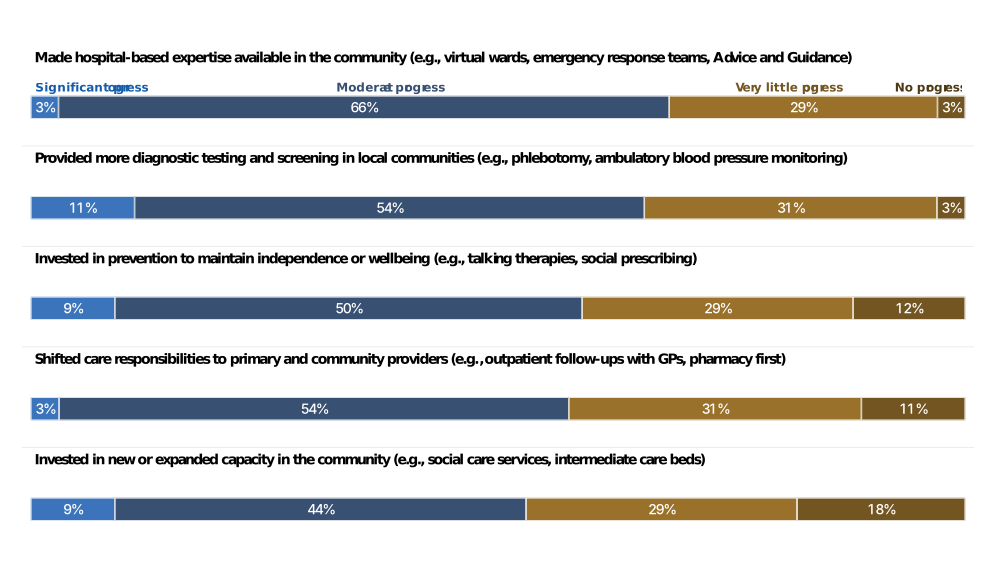
Note: Questions about moving care closer to home were answered by 38 out of 49 survey respondents (78%). The denominator for each sub-question varied here, as some respondents (between 3 and 4) selected ‘not applicable/unsure’ and these responses were excluded.
Example of a multi-agency care and co-ordination team (MACCT)
Aim: To identify adults living with frailty or a complex long-term health condition who would benefit from proactive care support to stay well, work towards their goals and reduce avoidable hospital attendances or crises. For example, people at risk of falls, people with dementia, people affected by polypharmacy issues, and unpaid carers.
Input: A multi-disciplinary team includes social workers, mental health workers, occupational therapists, physiotherapists, community matrons and a GP. In addition, team members are drawn from: Haringey Council (adult social care); North London NHS Trust, and voluntary sector agencies, to create a wider multi-agency, multi-professional team.
Activities: The team works with local GP practices to identify patients who would benefit from the service – and works with patients to set goals and create personalised care and crisis plans.
Outcomes: MACCT works with over 2,700 people a year, of whom 95% are aged 50 and over, and 60% living with moderate or severe frailty. In subsequent evaluation, 94% of patients reported that the service was ‘very good’ or ‘good’ and 70% reported that they had met or progressed towards their agreed health goals. Two-thirds reported that the service had reduced their fear of falling. An analysis of secondary care activity for the 12 months before and after the start of the MACCT service showed a 30% reduction in emergency department attendances and non-elective admissions for its patients.
Example of an acute response team service
Aim: To provide holistic care support to frail patients in their homes and in care homes, enabling hospital avoidance and community-based interventions through collaborative multidisciplinary working.
Input: Team of GPs, nurses, paramedics, allied health professionals, and geriatricians operating from 8am to 8pm (extended from 8am to 5:30pm during COVID-19). Serves 61 care homes with around 1,500 residents in Thanet district.
Activities: Daily monitoring of frail patients, responding to ambulance calls, remote hospital ward rounds, A&E assessments, face-to-face assessments, medication management, end-of-life care support, and fortnightly multidisciplinary knowledge-sharing webinars.
Outcomes: Around 1,000 professionals engaged across Kent and Medway and issues resolved within days that were previously unsolvable for year, enhanced collaboration between services, and demonstrable significant qualitative and quantitative impact, leading to consideration for ‘business as usual’ implementation.
East Kent: Sharing knowledge for a different mindset in health and social care
We also heard feedback about actions that strengthened community-based infrastructure:
We have been able to use small amounts of capital funding to turn administrative space into clinical rooms, use those clinical rooms for additional primary [and] community care services. In towns where there aren’t acute hospitals, people have been able to get treatment and screening, and things that they don’t need to go to hospital for, provided in their health centres closer to home.
Supporting older or frail populations
When asked about efforts to support older and frail people, systems reported having made most progress in:
- prevention and early intervention (12% significant progress and 61% moderate progress)
- assessment and care planning (9% significant progress and 61% moderate progress)
- multi-disciplinary care pathways (15% significant progress and 50% moderate progress)
- rapid reactive care, for e.g. rapid response services (27% significant progress and 36% moderate progress)(figure 22).
Relative to reported barriers in reducing health inequalities and shifting care into the community, workforce challenges were more frequently listed as a barrier (41% compared with 21-32% in other areas), though this research did not ascertain the drivers of those workforce barriers.
The areas of focus about supporting older and frail people were reflected strongly in interviews as people frequently cited work that identified and addressed the risk factors of ill-health among older and frail people.
Figure 22: Perceived progress in supporting older and/or frail people in the last 12 months
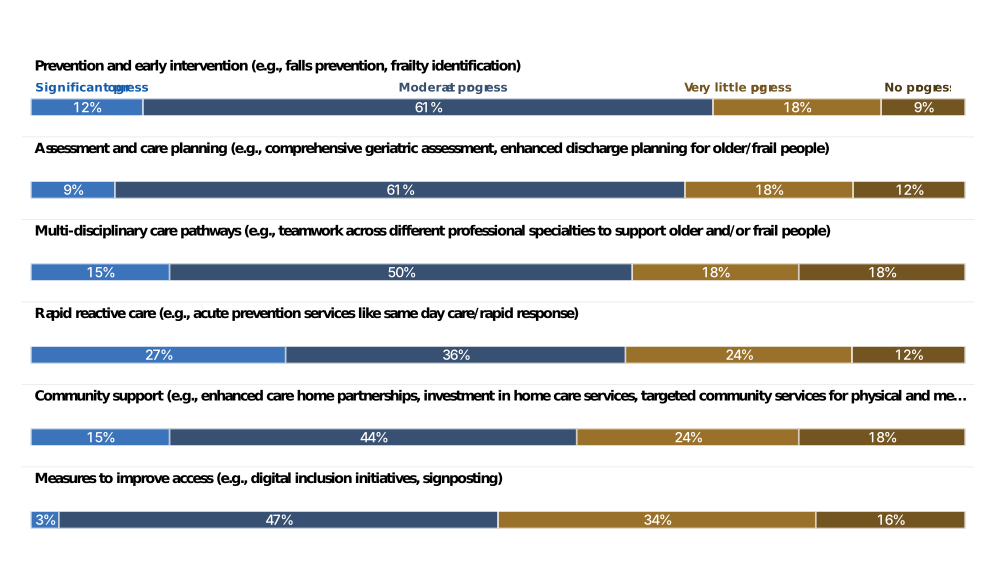
Note: Questions about actions to support older and/or frail people were answered by 34 out of 49 survey respondents (69%). The denominator for each sub-question varied here, as some respondents (between 1 and 2) selected ‘not applicable/unsure’ and these responses were excluded.
From the interviews, we heard about several key approaches for supporting older and/or frail people, focusing on preventative, joined-up and place-based approaches.
Systems are increasingly using data and information systems to proactively identify people at risk of ill health and injury. For example, they are using single care records to predict people’s risk of falling, and monitoring respiratory rates for early intervention in care homes that have nursing. We also heard about community-based multidisciplinary teams that provide proactive outreach to address these risk factors and prevent unnecessary admissions to hospital.
Example: eFalls pilot programme in Wigan
Aim: Help GPs to identify older adults who are at moderate risk of falling in the future, so they can receive early support to prevent injuries and maintain independence.
Input: NHS Greater Manchester data team uses the eFalls tool to search GP systems, using indicators such as frailty scores, falls history, medicines, and long-term conditions, and classifies patients into risk categories.
Activities: Patients identified are invited for a health check and offered a place on a Falls Management Exercise programme, to help improve strength, balance and confidence. Patients can be referred for onward services, such as eyesight checks.
Outcomes: The team is monitoring outcomes to assess the programme’s impact.
This proactive approach extended to expanding access to early diagnosis and preventative care through initiatives like advanced care planning in end-of-life care, as well as technology-enabled care to support people to stay connected, monitor falls, and reduce social isolation and loneliness.
To deliver these services effectively, we heard how some places have sought to break down traditional silos, through joint commissioning arrangements with GP practices and local authorities, establishing multi-disciplinary teams that take holistic approaches to care, and extending clinical expertise into community settings through innovations such as geriatrician hotlines and frailty fellows supporting care homes.
Interviewees described the development of integrated neighbourhood models as central to delivering more proactive care and support in the community for older and frail people.
Reducing health inequalities
Systems described being in a strong position to use evidence to identify population groups and clinical areas affected by health inequalities. Clinical areas included specifics such as maternity, severe mental illness, early cancer diagnosis and more. Often, they were able to identify effective interventions to address these issues, although data-sharing remains difficult. However, they reported not having sufficient financial or human resources to make effective change, and they described persistent difficulties in efforts to re-allocate resources from hospital services to address longer-term goals.
Although we heard that systems are committed to addressing health inequalities, with the same strong leadership and shared vision seen in the previous 2 priority areas, the picture of progress is more complex and variable. This was attributed in part to the variety of health inequalities in need of remedy, their entrenched nature requiring long-term solutions, and the importance of non-health system drivers such as housing and employment.
This variability can be seen in differences in how respondents to the survey viewed progress by population and health condition. Around three-quarters of respondents perceived that progress had been ‘significant or moderate’ in addressing Core20PLUS5 health inequalities among populations in deprived neighbourhoods (78%) and socially excluded or health inclusion groups (74%).
By contrast, two-thirds of respondents reported making ‘little or no progress’ in reducing health inequalities for groups with other protected characteristics (63%) and around 2 in 5 respondents reported making ‘little or no progress’ for ethnic minority communities (42%). There are mixed views on progress in addressing health inequalities in people with a learning disability or autism with 72% reporting ‘significant or moderate’ progress but 8% reporting no progress – the highest across the 5 groups (figure 23).
Figure 23: Perceived progress in addressing inequalities in Core20PLUS 5 population groups in the last 12 months
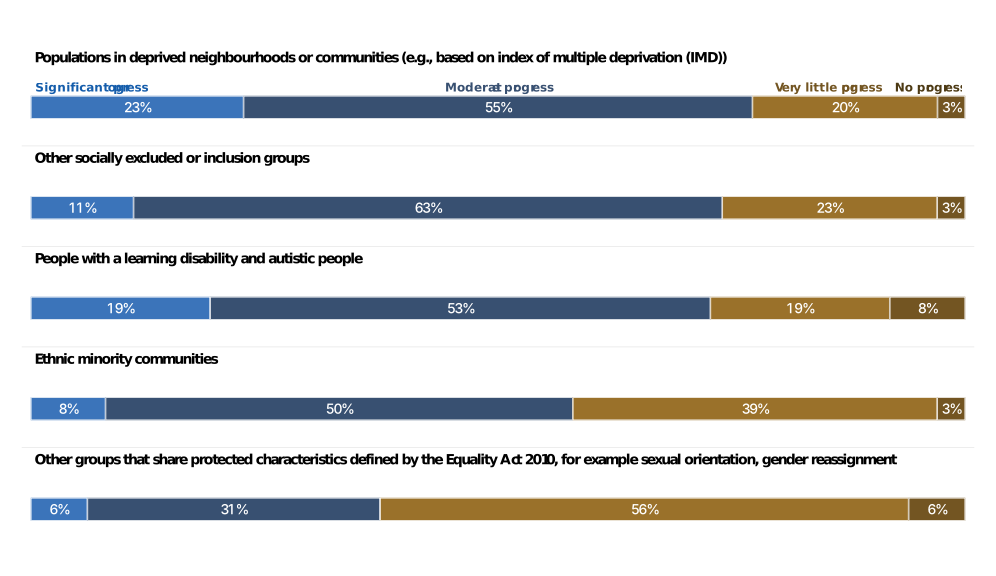
Note: Questions about addressing inequalities in Core20PLUS5 population groups were answered by 38 out of 49 survey respondents (78%). The denominator for each sub-question varied here, as some respondents (between 2 and 10) selected ‘not applicable/unsure’ and these responses were excluded.
We heard how specific groups were prioritised through better use of population health data and local intelligence (35 respondents, 83%), and the importance of partnerships with VCFSE organisations (36 respondents, 86%) and local authorities in understanding health inequalities in local areas and designing interventions that meet people’s needs. Just over half of respondents (55%) reported undertaking action to address the wider determinants of health that contribute to inequalities, such as deprivation, housing, or fuel poverty. This was further reflected by interviewees:
Local authorities [are helping to] provide us with really good cutting-edge data analytics so we can [best] target our interventions. They have helped us to target specific households in [the area] that are more likely to be at risk of fuel poverty, more likely to have people who are unable to heat their homes, and therefore more likely during winter to find themselves in A&E. And we’ve been able to do some very targeted intervention including with the support of [the energy sector] to improve insulation in those homes to keep people well at home and out of hospital.
We have a fantastic VCSE sector… what I feel we’ve really [reflected on] is how much VCSEs put into our local communities and the level of knowledge and experience they have. What we have put a lot of effort into is trying to understand the full breadth of VCSEs out there… There’s some really small VCSEs that are [representative of particular populations], but don’t have the infrastructure in place to be able to demonstrate the impact they’re making. One of the things we’ve tried to do is really tap into that resource, and take time to understand who is out there, what populations they’re representing, and to put time into listening to them in a way that doesn’t always fit neatly into a template.
Co-production, co-design, and engagement with people who use services and local communities was also reported as a key strategy to address health inequalities (34 respondents, 81%).
Other systems focused on specific clinical conditions where inequalities were most pronounced (such as hypertension and diabetes among certain ethnic groups), as described by interviewees:
One of the areas that we use the health inequalities funding for was around hypertension, so how you identify and then manage the target around hypertension. We use the funding to design a local incentive scheme, really targeting specific areas, specific practices, and how they were identifying patients.
ICSs were asked about the government's Core20PLUS5 priority areas, which are 5 key health conditions where there are recognised inequalities. Heart disease and stroke prevention saw the strongest progress in terms of significant advancement, with 20% of respondents reporting significant progress in this clinical area. While severe mental illness had a slightly higher overall positive response rate (73% reporting moderate or significant progress), only 3% reported significant progress – the lowest rate across all 5 areas, with most progress described as moderate (70%).
Overall, more ICSs reported making progress than not across all 5 health conditions. However, the perception of progress varied significantly between different population groups and health areas, with some seeing more progress in the last 12 months than others.
Vulnerable mothers
Example of services that aimed to reduce health inequalities.
Aim: Provide better support for vulnerable mothers who are more likely to experience poor maternal outcomes and access to care, including refugees and new arrivals, and women who are isolated with no support.
Input: Local volunteers are trained to become community doulas.
Activities: The community doulas provide practical and emotional support for women 6 weeks before birth, during labour, and 6 weeks after birth. Support can be delivered within the home, community or at a mutually agreed location.
Outcomes: In the final quarter of 2022/23, 26% of the women supported were of Black ethnicities, 48% South Asian and 12% Arab; a third were asylum seekers. Women living in temporary accommodation identified barriers to positive breastfeeding outcomes, which led to work to improve communication from health visitors.
Furthermore, 64% of the trained volunteers said they had gained transferrable skills and 29% said that volunteering had informed their choices for onward study or employment.
Enablers and barriers
There are different perceptions among ICSs about the presence of enablers and supportive factors, or barriers in the systems to progress on the 3 priorities (addressing health inequalities, shifting care closer to home, and supporting vulnerable populations).
For enabling factors, respondents were most likely to agree that, across the 3 priority areas:
- leaders have a shared understanding of priorities (54-62% of respondents agree or strongly agree)
- there is clear accountability for a given area (51-67% of respondents agree or strongly agree).
Across all 3 priorities, respondents were least likely to say they agreed with the statement “Leaders agree on how to shift resources to prioritise this work” (17-23% agree or strongly agree).
Respondents also reported similar barriers across the 3 priority areas, and were most likely to select:
- insufficient funding for relevant initiatives (selected by 56-71% of respondents)
- conflicting and/or competing national priorities (selected by 32-52% of respondents)
- limited capacity to operate beyond core service delivery (selected by 42-52% of respondents).
Respondents more frequently reported workforce challenges, for example recruitment and retention, as a barrier to supporting older and frail people (selected by 41% of respondents), when compared with the other 2 priority areas.
Systems consistently reported a struggle to balance national priorities with local transformation efforts across all areas. The focus on acute sector metrics, such as A&E waiting times and elective recovery, creates perverse incentives that work against community-focused, preventative approaches. Some systems reported a tension between national pressure for rapid results and the need for a long-term approach in addressing health inequalities:
Some of the national policy frameworks don’t really help, if I’m honest. When we have the annual planning round with NHS England, 90% of that is focused on the hospital sector. That’s where the attention of the system gets pulled. […] There’s very little on community-based neighbourhood work in primary care. Inevitably, people’s attention gets drawn to the hospital bit of the system.
These are the kind of things that we need to plan over the next 5 to 10 years for them to actually show some tangible benefit. But you don’t get funding year after year, and every year you have to fight to keep that funding going. That is really quite disheartening for people.
These issues are exacerbated by additional systemic barriers, including the concentration of funding within acute trusts and difficulty in shifting resources to community services and difficulties in demonstrating impact with the same level of confidence as acute sector interventions.
… I still see health inequalities discussed separately to saving the NHS or looking at how we reduce acute costs, and it should be described as health inequalities because that’s what it is. Culturally, we need to see it more as how do we get best use out of this resource? Sometimes people understand that more if you talk about it in the language of emergency admissions and the differences you see there.
Looking forward
ICSs have offered some perspectives on future activity and their confidence in delivering against the government’s 3 ambitions for the health sector.
Confidence levels on the ‘3 shifts’
More than half of survey respondents expressed being moderately, very, or extremely confident in their system's ability to deliver the government's 3 strategic shifts:
- moving care from hospitals to communities (57%)
- making better use of technology (59%)
- focusing on prevention. (51%)
Just over a quarter of respondents (27%) expressed no confidence at all in delivering community care and prevention shifts.
Confidence was highest for making better use of technology, with 84% of respondents reporting at least slight confidence, compared with 73% for prevention and community care (figure 24).
Interview participants identified several areas where national support could help progress. They emphasised the need for clearer guidance on implementation and success metrics, as well as financial mechanisms to support resource re-allocation. Additionally, they called for support in capacity building during transformation periods and recognition of the long-term nature of the required changes.
Figure 24: Confidence in ability to deliver the 3 shifts
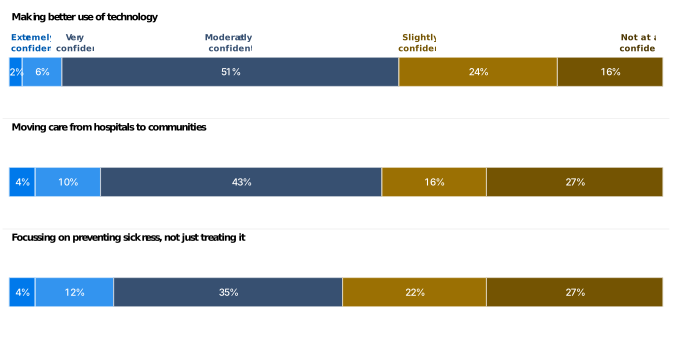
Note: Questions about confidence in their systems’ ability to deliver each of the 3 shifts were answered by 49 out of 49 survey respondents. No respondents selected ‘not applicable/unsure’ and therefore no responses were excluded.