CQC's inspection programme of Defence Medical Services: Annual report for 2024/25 (Year 8)
The impact of the inspection programme 2017 to 2025
This year, we have looked back at the outcomes of our inspections to identify any trends and improvement.
Improvement in dental centres
Our team of 4 inspectors have carried out 130 first and follow-up inspections since 2017. As with our inspections of CQC-registered dental providers, under the Health and Social Care Act we do not give a rating to these services, instead we assess whether they are meeting standards.
Figure 1 shows the numbers of dental centres that met standards across the 8-year programme.
Figure 1: Outcomes of inspections of dental centres 2017/18 to 2024/25

Source: CQC inspection outcomes
Note: We carried out a limited number of inspections in 2020/2021 because of COVID-19 restrictions.
Improved infrastructure
Across the 8-year programme, we have identified where the infrastructure has not allowed teams to comply with basic standards for infection prevention and control and safe dental decontamination (cleaning and sterilising instruments and equipment to prevent the spread of infection). We have reported concerns and issued recommendations, followed by enforcement action from the Defence Medical Services Regulator as necessary.
This approach has acted as a catalyst to secure improvements in infrastructure at some dental facilities, either through a new building or refurbishing the Central Sterile Supply Department (CSSD).
A flagship example is the new dental and medical facility at Leuchars Station. The new building is designed to be as sustainable as possible, including through thermal efficiency, solar panels, air source heat pumps and providing 4 electric vehicle charging stations. Building materials were selected not only based on suitability but to reduce carbon impact on the environment. The building aims to be an example of sustainability in construction for future MOD medical and dental centres.
Water management
A number of sites have improved how they manage water safety, although more work is needed to ensure consistency across all Defence Primary Healthcare.
We have re-inspected a number of dental centres to ensure that services provide clear information about water safety management to dental teams and that they resolve risks relating to routine water safety checks to minimise the risk of Legionella in the water system.
Improvement in medical centres
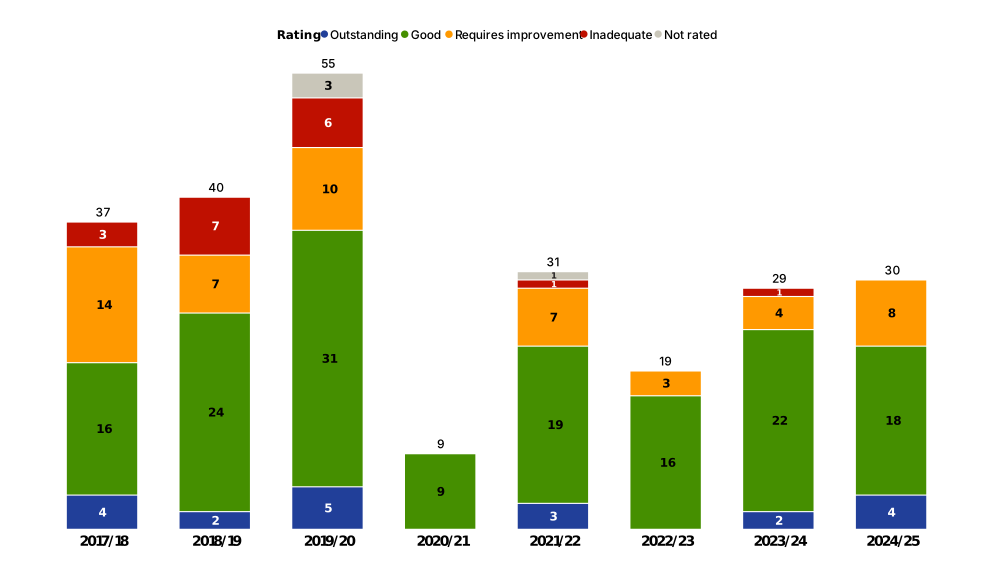
Since 2017, a team of 4 CQC inspectors have carried out 231 first and follow-up inspections of Defence medical centres. In the first 3 years, more medical centres were rated overall as inadequate or requires improvement. However, in 2024/25 (Year 8) no medical centres were rated as inadequate overall (figure 2).
Figure 2: Overall ratings for medical centres 2017/18 to 2024/25
Source: CQC inspection outcomes
Note: We carried out a limited number of inspections in 2020/2021 because of COVID-19 restrictions.
Throughout the programme, we have seen how services have made improvements to the quality of care in some of the following key areas.
Safeguarding
Early in the programme, we found services that were not fulfilling their duties to safeguard people who may be more vulnerable, including children. But in recent inspections, we have seen improvement in the way these patients are recorded in the patient record system, and how alerts are applied to their records. Information sharing with key stakeholders such as welfare teams and Multi-Agency Safeguarding Hubs (MASH) has also improved.
Managing high-risk medicines
As the inspection programme has progressed, we have found improved systems to manage patients who are prescribed high-risk medicines and fewer patients without a shared care protocol.
Managing test results
Defence healthcare facilities do not have access to Integrated Clinical Environment (ICE) Order Communications Software (a single system that allows healthcare professionals to electronically request tests and view results, including those from both primary and secondary care). Medical centre teams have therefore adapted manual systems to manage test results.
At the start of the inspection programme, we frequently identified services with no failsafe system to manage test results. More recently, we have found that more medical centres have systems in place. Nevertheless, incidents will still happen due to human error, inadequate deputising arrangements when staff are on leave, or because significant events do not lead to embedded learning.
Accessible services
We have noted more access audits for premises, as defined in the Equality Act 2010.
Complaints management
Complaints management has improved, including a move to record and act on verbal as well as written complaints. Services are also increasingly using analysis of trends from complaints as opportunities to improve care.
Managing long-term conditions
In the early years of the programme, we identified gaps in managing the care of patients who have a long-term condition. This included a failure to recall patients in line with National Institute for Health and Care Excellence (NICE) guidance. In recent inspections, we have noted wider adoption of a standardised chronic disease management tool (CDMT) and standard operation procedure to manage chronic conditions.
Quality improvement work
In earlier inspections we noted a lack of comprehensive quality improvement work that was relevant to and targeted around delivering improved outcomes for patients. More recently, we have found more examples of cyclical improvement programmes designed to identify improvements across both clinical and management areas, and which integrate the needs of patients using the medical centre and the primary care rehabilitation facility.