The safer management of controlled drugs: Annual update 2024
National trends in the prescribing of controlled drugs
Notes on data: Data on prescribing is collected by ePACT2 – an online application that provides authorised users with access to prescription data held by NHS Business Services Authority. For prescribing in the NHS, including hospitals and dental services, we have extracted data from this application for the years 2022, 2023 and 2024 to provide overall figures and trend analysis. For non-medical prescribing, the NHS Community Pharmacist Consultation Service, and requisitions and prescribing in independent primary care, the data for 2024 was supplied directly by NHS Business Services Authority.
In this report, we compare current data for 2024 with the data published in our report for 2023. There may be changes to overall figures for 2023, as ePACT2 may be updated over time.
Prescribing trends in primary care
In this section, we highlight trends of the most prescribed controlled drugs.
Overall prescribing of controlled drugs in 2024 - Schedules 2 to 5
Total controlled drug items prescribed by NHS primary care services increased slightly by 0.4%:
- 74,160,671 items in 2024
- 73,851,955 items in 2023
The cost of this was £585,671,333 in 2024 compared with £572,621,516 in 2023 (an increase in cost of 2%).
Overall prescribing levels across the different schedules remain stable and prescribing trends in NHS primary care in 2024 are very similar to previous years (figure 3):
- There were increases in prescribing volumes of medicines that are licensed to treat attention deficit hyperactivity disorder (ADHD), such as dexamfetamine, lisdexamfetamine and methylphenidate (figure 7).
- Prescribing of testosterone continued to increase.
- There was also an increase in non-medical prescribing, as prescribing by pharmacists continues to grow and again accounts for over half of non-medical prescribing.
- There was a reduction in prescribing of pholcodine, pethidine, co-proxamol, oxazepam, nitrazepam, fentanyl, diamorphine, zopiclone and zolpidem.
Figure 3: Prescribing of controlled drugs by schedule in 2024
| Schedule | Percentage change | Total items prescribed in 2024 | Total items prescribed in 2023 |
|---|---|---|---|
| up by 2% | 9,514,472 | 9,359,728 |
| Schedule 3 | up by 2% | 26,551,610 | 26,114,783 |
| Schedule 4 | down by 3% | 12,450,327 | 12,845,310 |
| Schedule 5 | up by less than 0.5% | 25,644,262 | 25,532,134 |
Of all prescribing of controlled drugs in primary care in 2024:
- Schedule 2 accounted for 13%
- Schedule 3 accounted for 36%
- Schedule 4 accounted for 17%
- Schedule 5 accounted for 35%
Figure 4: Prescribing of all controlled drugs in primary care, by schedule, 2024
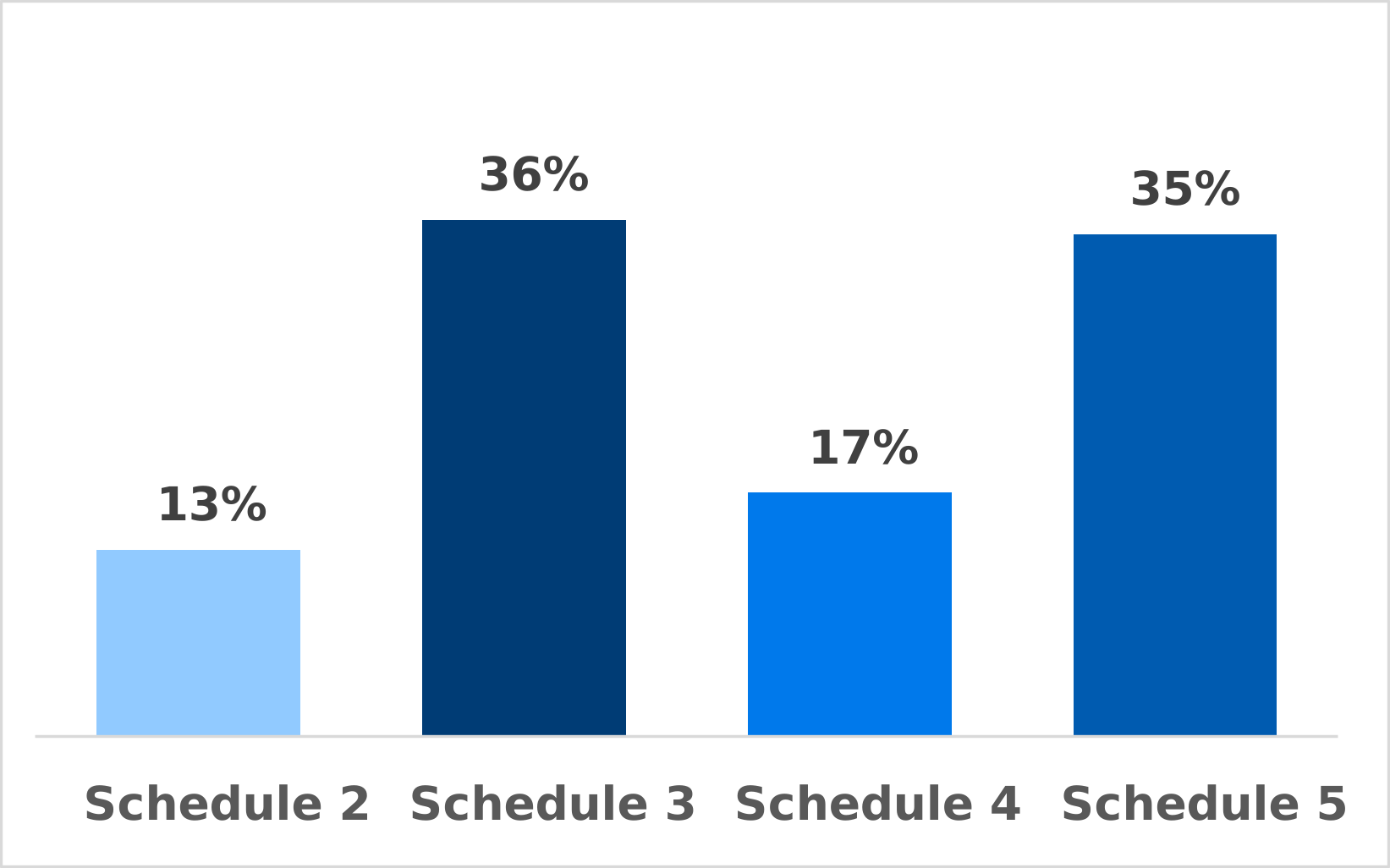
(Totals add up to more than 100% due to rounding)
Patterns of prescribing in NHS primary care
Of the most prescribed controlled drugs in 2024, there was a reduction in prescribing for some compared with 2023 (figure 5).
Figure 5: Reductions in prescribing of controlled drugs in 2024
| Controlled drug | Percentage change | Total items prescribed in 2024 | Total items prescribed in 2023 |
|---|---|---|---|
| Pholcodine (Schedule 5) | down by 98% | 113 | 5,744 |
| Pethidine (Schedule 2) | down by 25% | 1,522 | 2,035 |
| Diamorphine (Schedule 2) | down by 21% | 6,559 | 8,279 |
| Co-proxamol (Schedule 5) | down by 18% | 4,177 | 5,078 |
| Oxazepam (Schedule 4) | down by 10% | 44,042 | 48,850 |
| Fentanyl (Schedule 2) | down by 9% | 681,555 | 746,034 |
| Zolpidem (Schedule 4) | Down by 7% | 579,437 | 625,656 |
| Co-dydramol (Schedule 5) | down by 6% | 1,246,920 | 1,324,448 |
| Methadone (Schedule 2) | down by 5% | 1,629,110 | 1,711,427 |
| Phenobarbital (Schedule 3) | down by 5% | 145,102 | 153,148 |
| Diazepam (Schedule 4) | down by 5% | 3,962,912 | 4,189,217 |
| Zopiclone (Schedule 4) | down by 4% | 4,311,158 | 4,486,295 |
| Dihydrocodeine (Schedule 5) | down by 2% | 1,366,965 | 1,390,035 |
| Temazepam (Schedule 3) | down by 1% | 332,834 | 335,123 |
Prescribing of pholcodine has continued to reduce following the 2023 safety alert recommending that it should not be used.
At the same time, of the most prescribed controlled drugs in 2024, there was an increase in prescribing for some, compared with 2023 (figure 6).
Figure 6: Increases in prescribing of controlled drugs in 2024
| Controlled drug | Percentage change | Total items prescribed in 2024 | Total items prescribed in 2023 |
|---|---|---|---|
| Dexamfetamine (Schedule 2) | up by 50% | 169,467 | 113,308 |
| Lisdexamfetamine (Schedule 2) | up by 27% | 630,949 | 498,620 |
| Testosterone (all forms) (Schedule 4) | up by 13% | 683,678 | 606,002 |
| Methylphenidate (Schedule 2) | up by 7% | 1,643,120 | 1,529,638 |
| Pregabalin (Schedule 3) | up by 5% | 9,507,036 | 9,053,894 |
| Buprenorphine (Schedule 3) | up by 4% | 3,485,411 | 3,349,558 |
| Midazolam (Schedule 3) | up by 1% | 370,147 | 365,586 |
Looking at the proportions of controlled drugs in different schedules prescribed in 2024:
- pregabalin and gabapentin accounted for 64% of all Schedule 3 prescribing
- diazepam and zopiclone accounted for 66% of all Schedule 4 prescribing
- co-codamol accounted for 59% of all Schedule 5 prescribing
- methylphenidate, lisdexamfetamine and dexamfetamine accounted for 26% of all Schedule 2 prescribing
- morphine sulfate accounted for 29%, and oxycodone 20% of all Schedule 2 prescribing
These general trends are similar to previous years.
Figure 7: Total number of items of methylphenidate, lisdexamfetamine and dexamfetamine prescribed in NHS primary care in England, 2020 to 2024
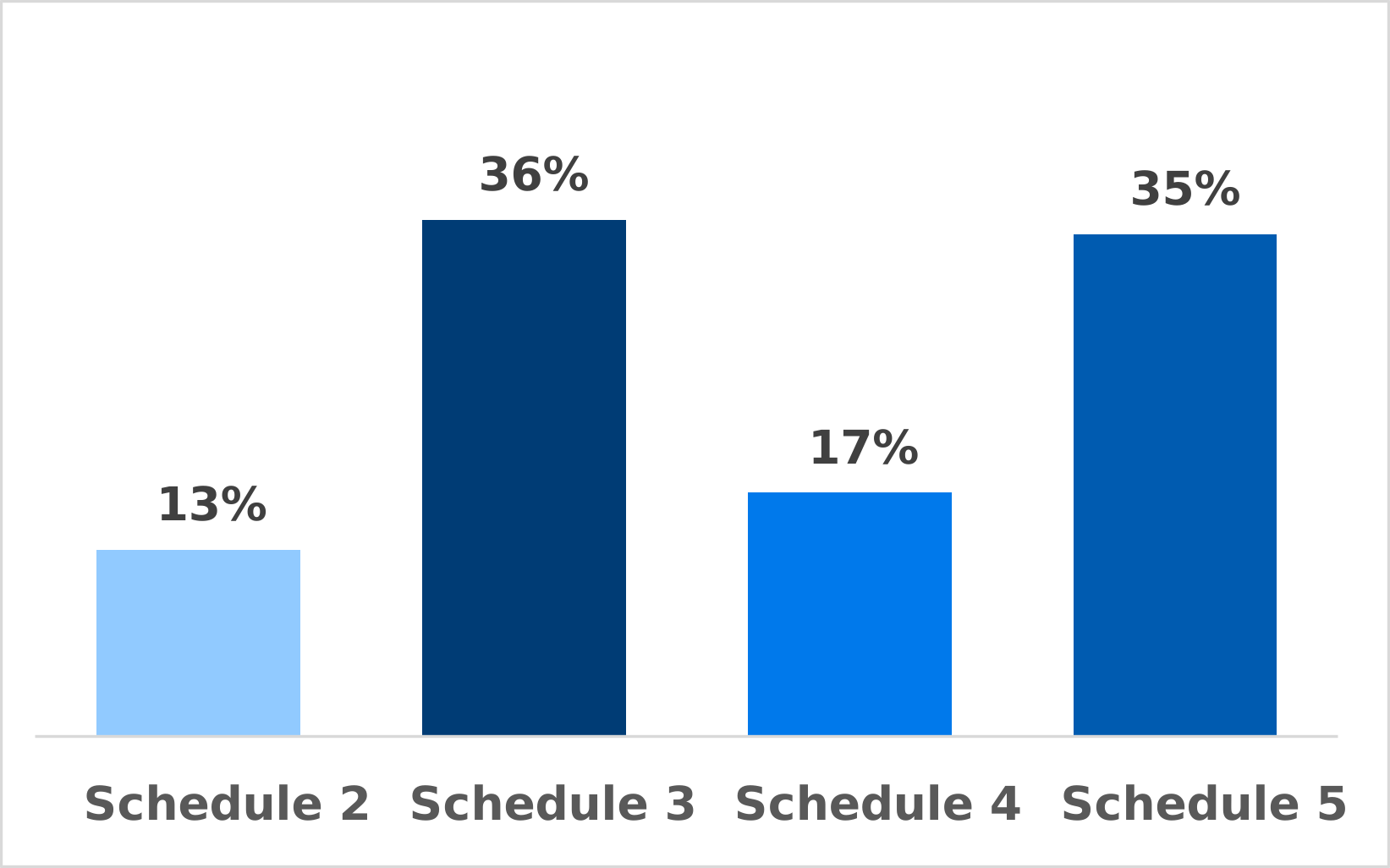
Figure 7 shows the sustained increase in prescribing, which has become more pronounced since 2020. All 3 medicines continue to show relatively sharp upward trends in prescribing compared with many other controlled drugs. We continue to monitor the trends of these in particular because of concerns around capacity in NHS settings, increases in the number and activity of independent clinics (including online clinics) and concerns around shared care, all of which we have highlighted in previous reports.
Adult and child prescribing of medicines for ADHD
This year, we also looked at the trends for prescribing of medicines for ADHD, for both adults and children, since 2015. This includes both prescribing in NHS hospitals and primary care. In general, prescribing for adults has risen steeply since 2019, especially for dexamfetamine and lisdexamfetamine (figures 8 and 9).
Figure 8: Prescribing of medicines for ADHD in adults in NHS hospitals and primary care by number of items, 2015 to 2024
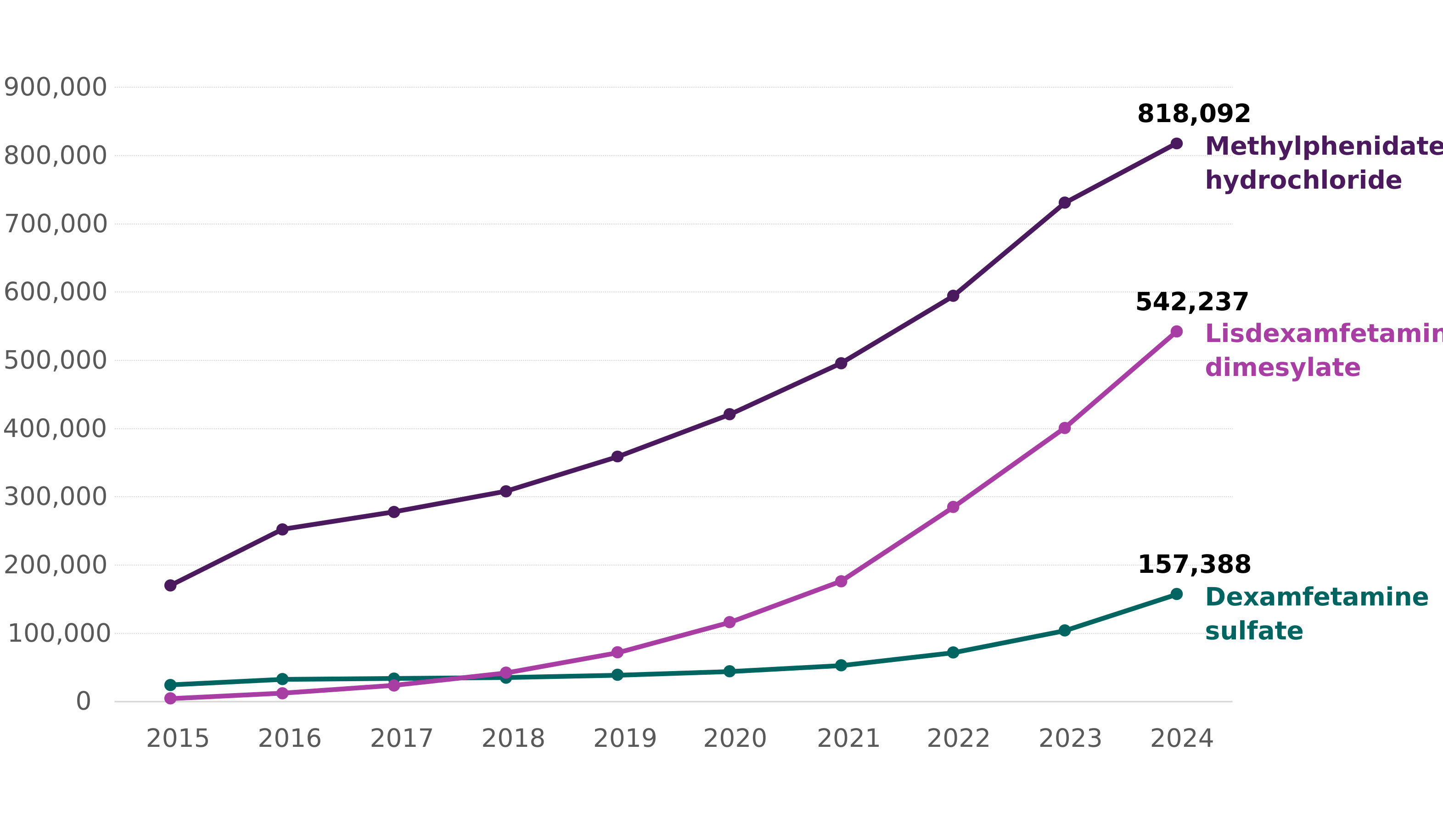
Figure 9: Prescribing of medicines for ADHD in children in NHS hospitals and primary care by number of items, 2015 to 2024
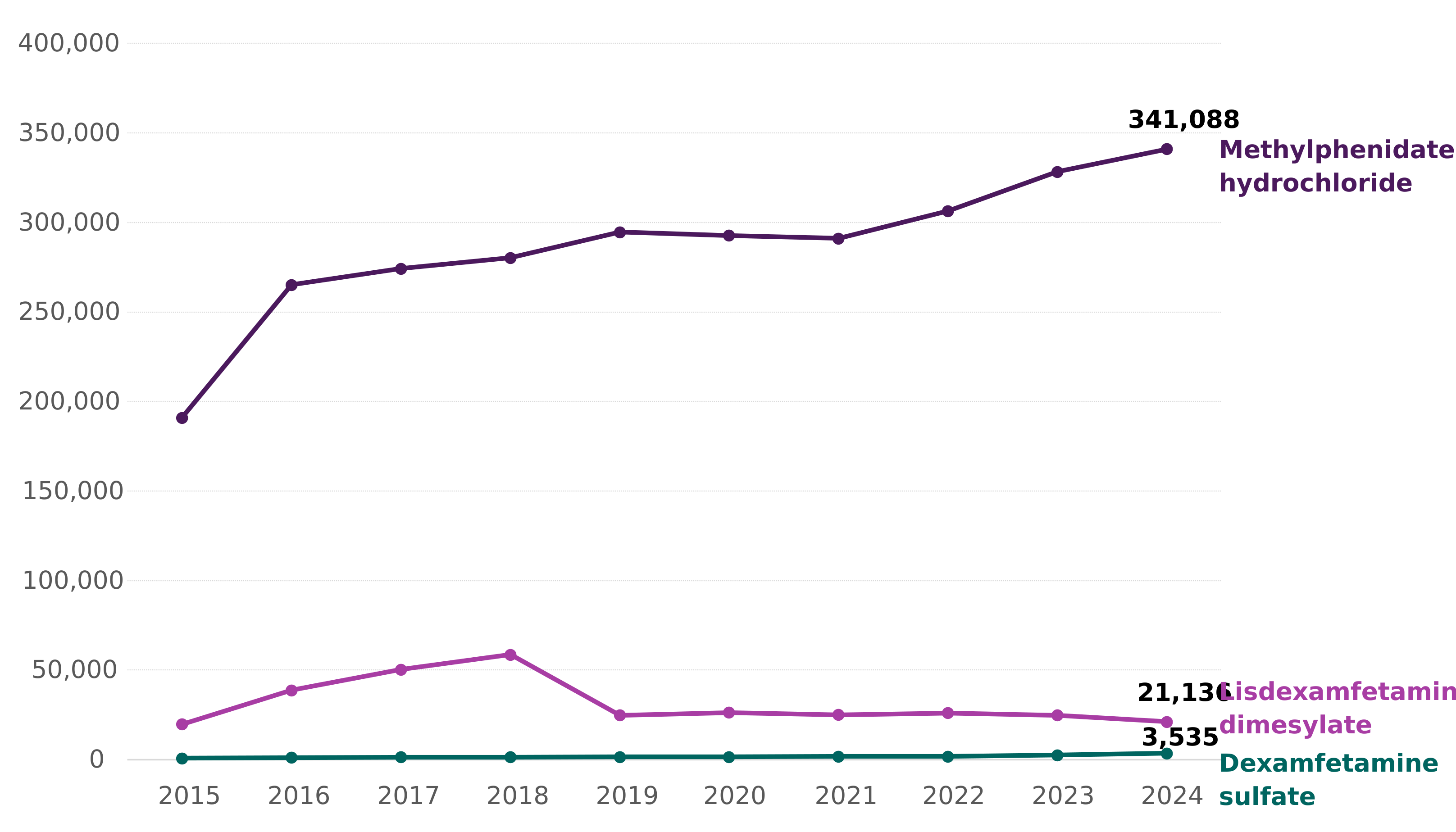
Note: Age data was missing for a number of prescriptions, therefore these have been excluded from figures 8 and 9.
NHS non-medical prescribing
Overall prescribing of controlled drugs by non-medical prescribers (healthcare professionals other than a doctor or dentist) increased by 9% during 2024:
- 5,922,526 items prescribed in 2024
- 5,440,585 items prescribed in 2023
Figure 10 shows the continued trend for increases in non-medical prescribing since 2020. We expect this to continue, particularly as pharmacists who graduate in 2025 and register with the General Pharmaceutical Council in 2026 will all be prescribers.
Figure 10: Non-medical prescribing of controlled drugs by number of items, 2020 to 2024
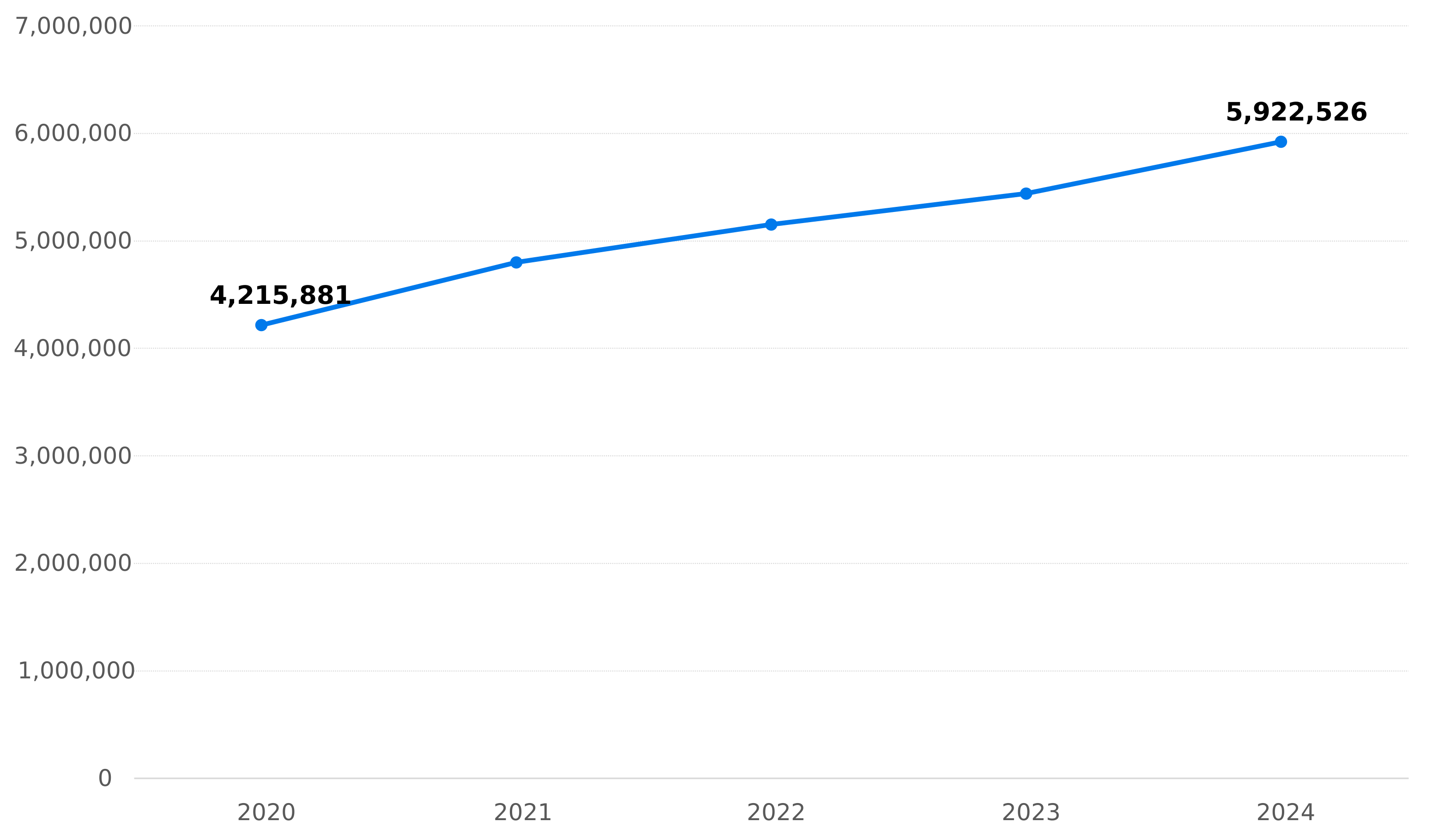
Pharmacists undertook 56% of all non-medical prescribing of controlled drugs in 2024 (3,332,074 items) compared with 53% in 2023. There has also been a sharp increase in the number of items prescribed by paramedics.
Figure 11: Non-medical prescribing of controlled drugs in 2024 by professional group
| Non-medical prescriber | Percentage change | Total items prescribed in 2024 | Total items prescribed in 2023 |
|---|---|---|---|
| Pharmacist | up by 15% | 3,332,074 | 2,908,340 |
| Nurse | up by 1% | 2,545,702 | 2,524,854 |
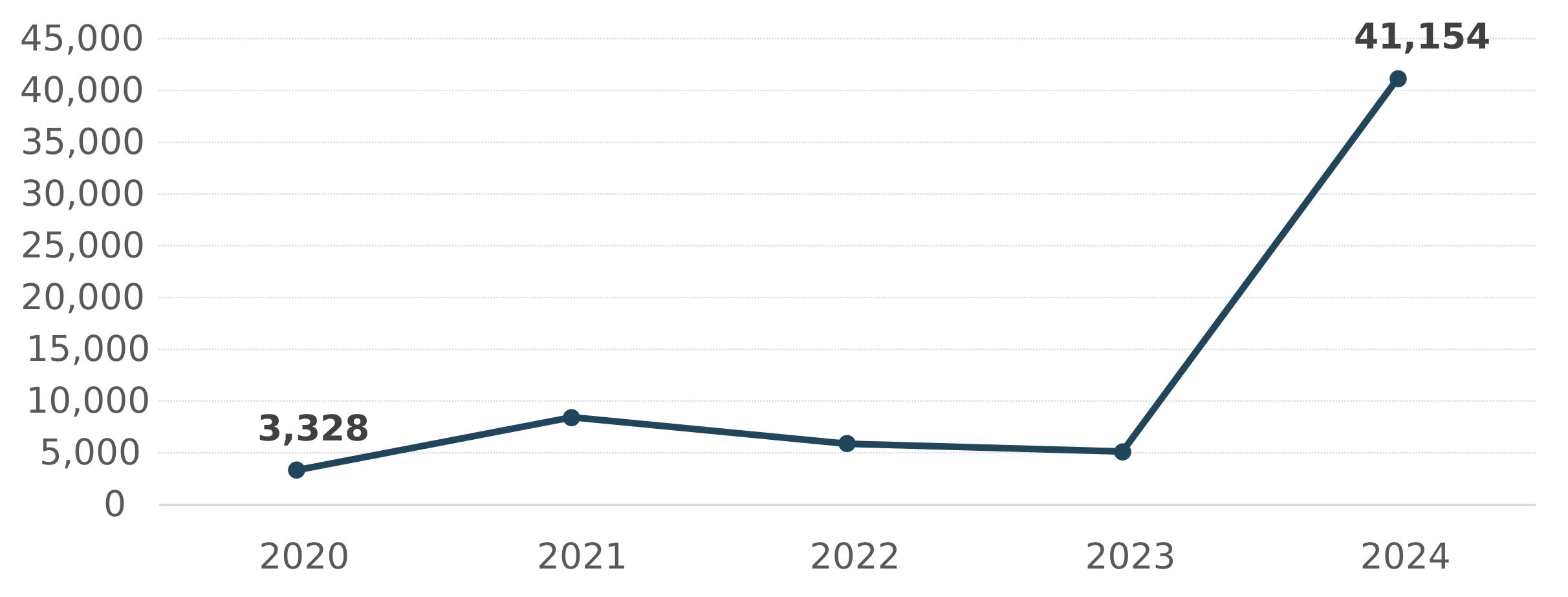
| Paramedic | Up by 704% | 41,154 | 5,116 |
| Physiotherapist | up by 62% | 3,395 | 2,098 |
| Radiographer | down by 20% | 89 | 111 |
| Podiatrist | Up by 38% | 87 | 63 |
Figures 12 to 15 show increases in prescribing by pharmacists, nurses and paramedics since 2020.
Figure 12: Pharmacist prescribing of controlled drugs by number of items, 2020 to 2024
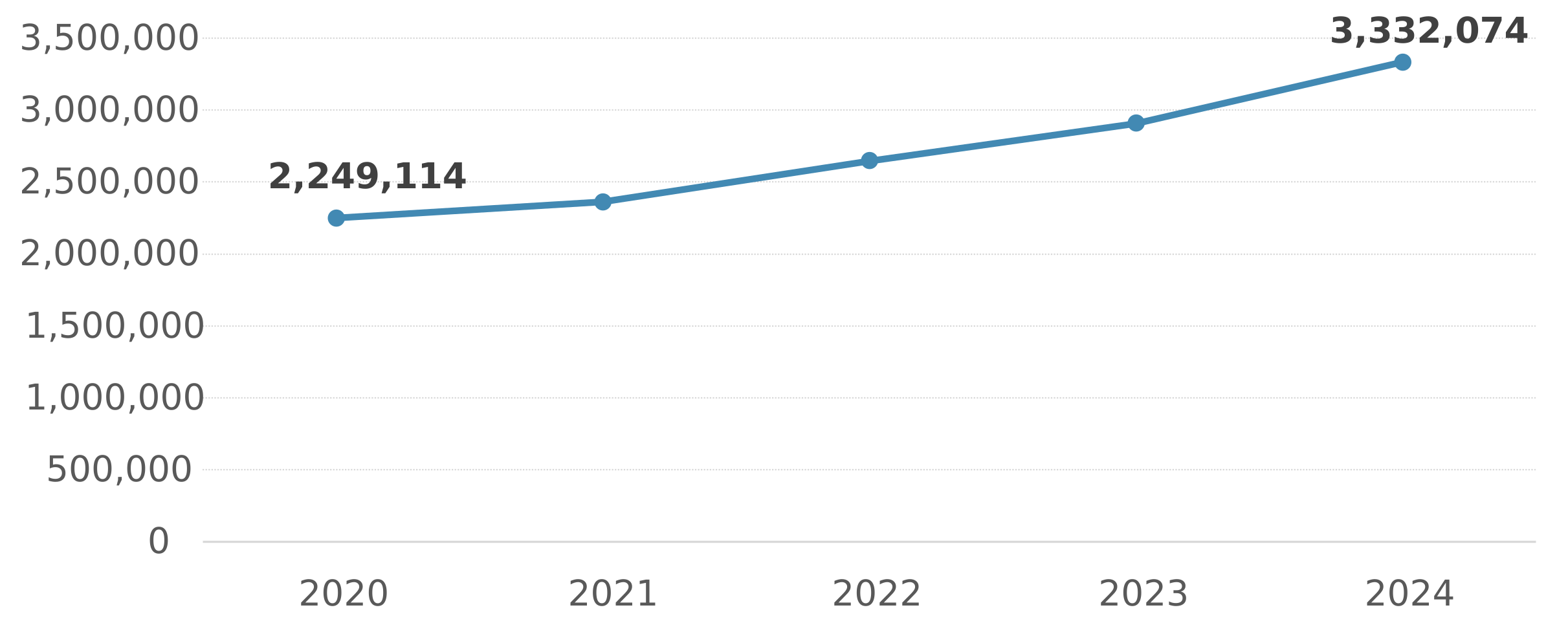
Figure 13: Nurse prescribing of controlled drugs by number of items, 2020 to 2024
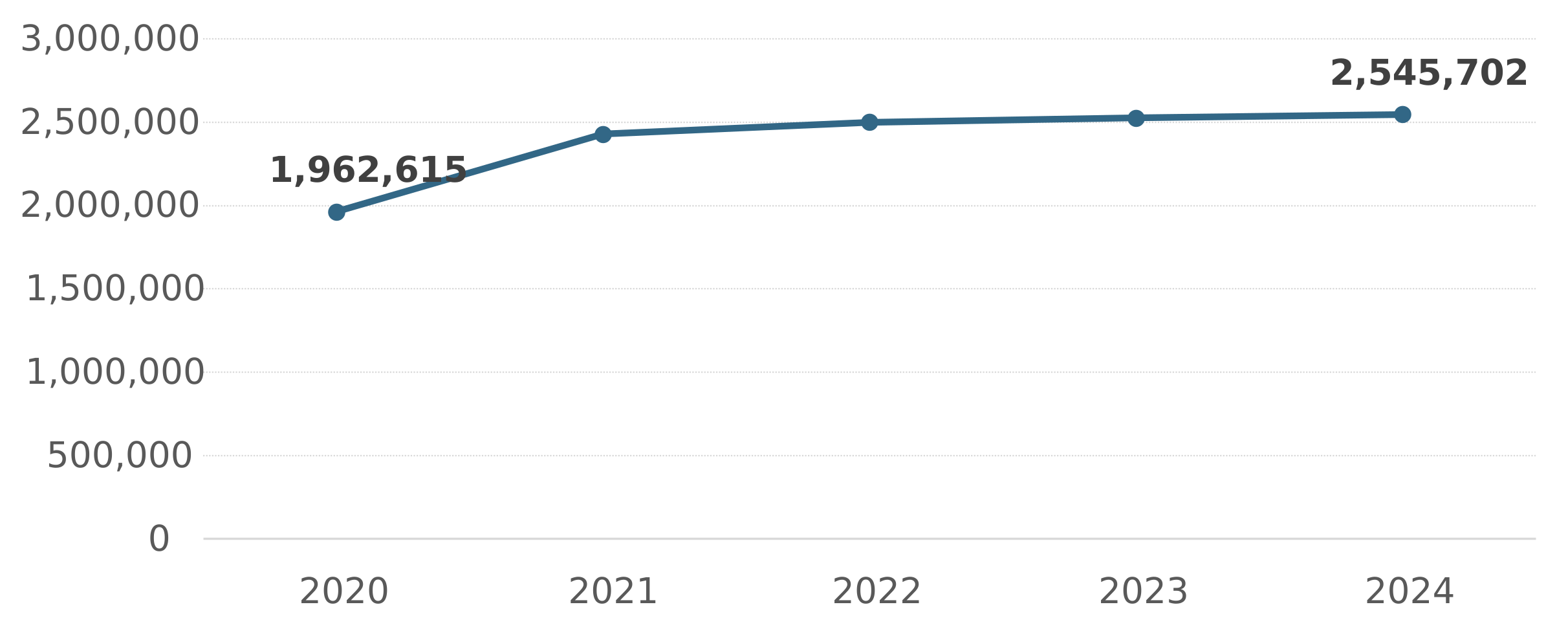
Figure 14: Paramedic prescribing of controlled drugs by number of items, 2020 to 2024
Overall, nurse prescribing accounts for 3% of all controlled drug prescriptions in NHS primary care, with pharmacist prescribing accounting for 5%.
Pharmacist prescribing
Figure 15 shows the controlled drugs prescribed by pharmacists at volumes in excess of 10,000 items during 2024. As a professional group, prescribing volume increases are higher than those for nurses, especially for co-codamol, pregabalin and gabapentin.
Pharmacist prescribing of medicines for ADHD also increased in 2024:
- lisdexamfetamine (schedule 2) increased by 42% from 25,625 to 36,389 items.
- methylphenidate (schedule 2) also increased by 42% from 57,770 to 82,181 items.
- dexamfetamine (schedule 2) prescribing increased by 65% from 6,026 to 9,947 items.
Figure 15: Pharmacist prescribing of controlled drugs in 2024
| Controlled drug & Schedule | Percentage change | Total items prescribed in 2024 | Total items prescribed in 2023 |
|---|---|---|---|
| Co-codamol (Schedule 5) | up by 15% | 648,599 | 563,232 |
| Pregabalin (Schedule 3) | up by 22% | 490,330 | 401,398 |
| Gabapentin (Schedule 3) | up by 14% | 341,202 | 299,679 |
| Tramadol (Schedule 3) | up by 12% | 237,120 | 212,149 |
| Codeine (Schedule 5) | up by 16% | 225,456 | 195,183 |
| Zopiclone (Schedule 4) | up by 8% | 174,167 | 160,604 |
| Diazepam (Sch 4) | up by 7% | 168,907 | 157,141 |
| Buprenorphine (Schedule 3) | up by 12% | 138,758 | 124,265 |
| Morphine sulfate (Schedule 2) | up by 11% | 125,288 | 112,692 |
| Morphine sulfate (Schedule 5) | up by 13% | 103,592 | 91,361 |
| Oxycodone (Schedule 2) | up by 13% | 96,560 | 85,593 |
| Methylphenidate (Schedule 2) | up by 42% | 82,181 | 57,770 |
| Dihydrocodeine (Schedule 5) | up by 14% | 64,876 | 56,920 |
| Methadone (Schedule 2) | down by 13% | 61,086 | 70,092 |
| Co-dydramol (Schedule 5) | up by 16% | 59,614 | 51,554 |
| Clonazepam (Schedule 4) | up by 18% | 54,232 | 46,095 |
| Lorazepam (Schedule 4) | up by 14% | 45,806 | 40,195 |
| Lisdexamfetamine (Schedule 2) | up by 42% | 36,389 | 25,625 |
| Fentanyl (Schedule 2) | down by 1% | 28,488 | 28,689 |
| Zolpidem (Schedule 4) | up by 13% | 25,322 | 22,356 |
| Clobazam (Schedule 4) | up by 23% | 23,021 | 18,781 |
| Testosterone (all forms) (Schedule 4) | up by 20% | 27,824 | 23,102 |
| Temazepam (Schedule 3) | up by 15% | 14,170 | 12,337 |
| Nitrazepam (Schedule 4) | up by less than 0.5% | 13,305 | 13,266 |
| Tapentadol (Schedule 2) | up by 29% | 10,170 | 7,910 |
Nurse prescribing
Figure 16 shows controlled drugs that were prescribed by nurses at volumes in excess of 10,000 items during 2024.
Figure 16: Nurse prescribing of controlled drugs in 2024
| Controlled drug & Schedule | Percentage change | Total items prescribed in 2024 | Total items prescribed in 2023 |
|---|---|---|---|
| Methadone hydrochloride (Schedule 2) | down by 5% | 508,781 | 536,072 |
| Co-codamol (Schedule 5) | up by 1% | 394,003 | 391,431 |
| Buprenorphine (Schedule 3) | up by 4% | 342,751 | 328,009 |
| Pregabalin (Schedule 3) | up by 6% | 192,358 | 181,212 |
| Codeine (Schedule 5) | up by 3% | 164,389 | 159,539 |
| Gabapentin (Schedule 3) | up by 4% | 157,757 | 151,814 |
| Tramadol (Schedule 3) | down by 2% | 111,575 | 113,710 |
| Diazepam (Schedule 4) | down by 6% | 97,447 | 103,938 |
| Zopiclone (Schedule 4) | down by 3% | 88,489 | 91,282 |
| Morphine sulfate (Schedule 2) | up by 3% | 80,265 | 77,796 |
| Morphine sulfate (Schedule 5) | up by 3% | 62,568 | 60,545 |
| Methylphenidate (Schedule 2) | up by 8% | 62,087 | 57,536 |
| Oxycodone (Schedule 2) | up by 10% | 51,323 | 46,708 |
| Dihydrocodeine (Schedule 5) | down by 1% | 29,647 | 29,986 |
| Lorazepam (Schedule 4) | down by 2% | 27,757 | 28,182 |
| Midazolam (Schedule 3) | up by 8% | 27,352 | 25,210 |
| Co-dydramol (Schedule 5) | down by less than 0.5% | 25,309 | 25,404 |
| Lisdexamfetamine (Schedule 2) | up by 18% | 22,697 | 19,201 |
| Clonazepam (Schedule 4) | up by 3% | 18,519 | 17,929 |
| Testosterone all forms (Schedule 4) | up by 15% | 17,348 | 15,054 |
| Fentanyl (Schedule 2) | down by 8% | 15,604 | 17,011 |
| Zolpidem (Schedule 4) | down by 7% | 10,691 | 11,468 |
Paramedic prescribing
Paramedic prescribing increased by 704% in 2024 compared with the previous year. Changes to the law at the end of 2023 permitted paramedic independent prescribers to prescribe a range of controlled drugs. These are:
- morphine sulfate by oral administration or by injection
- diazepam by oral administration or by injection
- midazolam by oromucosal administration or by injection
- lorazepam by injection
- codeine phosphate by oral administration.
Increases in prescribing are likely linked to this change in prescribing permissions. As in previous years, paramedics continue to prescribe a wider range of controlled drugs than they are legally entitled to. For example, prescribing data shows that 1,176 prescriptions for zopiclone (Schedule 4) were issued and dispensed in 2024.
This serves as a reminder that all prescribers should be working within their scope of practice, and within the legal boundaries of their prescribing rights. Professional regulators also have guidance on this for their registrants.
When we inspect services, we check how providers assure themselves that prescribers are working within their scope of practice, and that the service offered is safe and effective.
Non-medical prescribing in different settings
This year, to gain a better understanding behind the increase in non-medical prescribing, we also looked at the different types of services where prescriptions from non-medical prescribers originate. Figure 17 shows the number of items prescribed in a range of settings. Although most prescribing happens in GP settings, it is also encouraging to see prescribing in other areas, such as in care homes and services in the health and justice sector.
Figure 17: Examples of non-medical prescribing of controlled drug items by profession and setting, 2024
| Location | Nurse prescribers | Paramedic prescribers | Pharmacist prescribers |
|---|---|---|---|
| GP practice | 1,572,661 | 38,727 | 3,238,228 |
| Community health service | 235,168 | 486 | 42,498 |
| Hospital service | 54,868 | 151 | 10,026 |
| Hospice | 19,825 | 4 | 206 |
| Out-of-hours service | 12,514 | 410 | 4,283 |
| Urgent & emergency care | 5,301 | 727 | 172 |
| Walk-in-centre | 3,507 | 108 | - |
| Primary care network | 1,751 | 131 | 240 |
| Walk-in centre and out-of-hours service | 1,688 | - | - |
| Care home/care home with nursing | 1,329 | - | 304 |
| Health & justice services | 219 | - | 3 |
| Other | 265,021 | 410 | 6,856 |
Non-medical prescribing in geographical locations
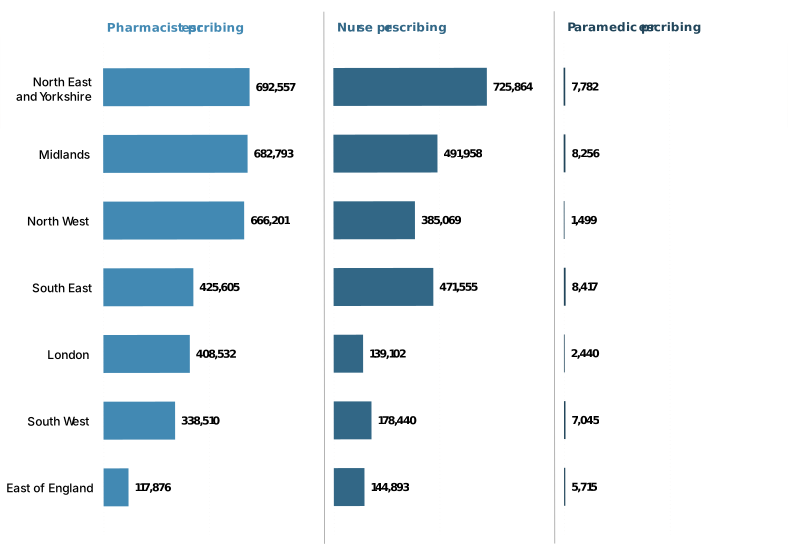
We also looked at the geographical split of pharmacist, nurse and paramedic prescribing. This is highest in the North East and Yorkshire and lowest in the East of England.
Figure 18: Geographical prescribing of controlled drug items by non-medical prescribers in England, 2024
NHS dental prescriptions for controlled drugs
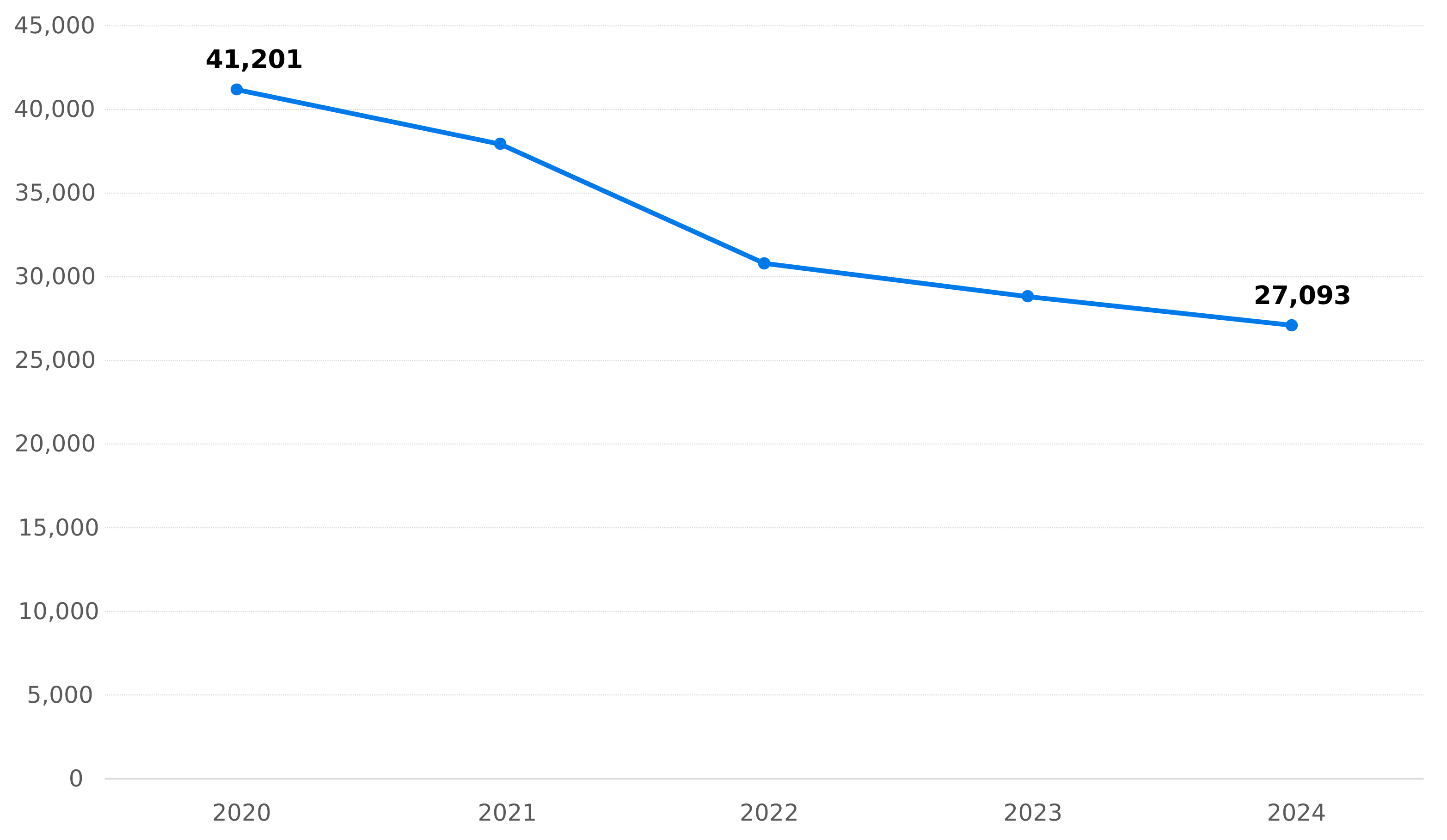
Total controlled drug items prescribed by NHS dentists decreased by 6%:
- 27,093 items in 2024
- 28,819 items in 2023
Since 2021 there has been a gradual reduction in controlled drugs prescribing by NHS dentists (figure 19). This has largely been driven by reduced dihydrocodeine prescribing.
Figure 19: Total controlled drug items prescribed by NHS dentists in England, 2020 to 2024
Dentists working in the NHS can prescribe 3 controlled drugs on NHS dental prescription forms to patients.
Dihydrocodeine: as in previous years, this was the most prescribed medicine, accounting for 80% of total dental prescribing in 2024, although prescribing decreased by 8%:
- 21,783 items prescribed in 2024
- 23,714 items prescribed in 2023
Diazepam: Between 2023 and 2024 prescribing increased by 3% (4,497 total items prescribed in 2024).
Temazepam: Between 2023 and 2024, prescribing increased by 11% (813 total items prescribed in 2024).
Our most recent State of Care report highlighted that NHS dental care is facing a crisis, as the proportion of adults who have seen an NHS dentist in the last 24 months and children who have seen an NHS dentist in the last 12 months is lower than in 2019/20.
As in previous years, the patterns of decreased prescribing may be an ongoing consequence of this.
ePACT2 Opioid comparators dashboard
Last year, we looked at prescribing of opioids in a specific geographical area. This pattern remained similar for 2025, with prescribing highest in the North of England.
We also looked at prescribing of ‘high oral morphine equivalent’ volume of opioid prescribing, in combination with other medicines, such as gabapentinoids, antidepressants and z-drugs (figure 20). The risk of harm increases substantially at doses above an oral morphine equivalent of 120mg/day, but there is no increased benefit. Risk can be increased further when this is prescribed alongside these other medicines.
Figure 20: High oral morphine equivalent prescribing with other medicines, 22 January to 18 February 2025 compared with 29 February to 27 March 2024
| Medicines prescribed in combination with high oral morphine equivalent | Prescribed for 1 to 84 days | Prescribed for 85 to 168 days | Prescribed for 169 days or more |
|---|---|---|---|
| Gabapentinoids | 237 in 2025 263 in 2024 | 402 in 2025 440 in 2024 | 24,919 in 2025 26,525 in 2024 |
| Antidepressants | 259 in 2025 272 in 2024 | 445 in 2025 463 in 2024 | 34,954 in 2025 37,332 in 2024 |
| Benzodiazepines | 79 in 2025 109 in 2024 | 137 in 2025 131 in 2024 | 6,973 in 2025 7,559 in 2024 |
| Z-drugs | 43 in 2025 63 in 2024 | 69 in 2025 83 in 2024 | 5,129 in 2025 5,576 in 2024 |
We have seen a reduction in the co-prescribing of high oral morphine equivalent with other medicines, particularly in patients who have been taking them for a longer period (169 days or more). This could be because some health and care teams place more emphasis on reducing higher risk prescribing.
Prescribing in NHS hospitals for community pharmacy dispensing
In 2024, hospital prescribing (on FP10HP prescription forms that can be dispensed in a community pharmacy) was also broadly in line with 2023.
Total controlled drug items across Schedules 2 to 5 prescribed in hospital using an FP10(HNC) or FP10SS form increased by 5%:
- 1,022,291 items in 2024
- 978,223 items in 2023
The cost of this was £18,176,281 in 2024 compared with £16,420,790 in 2023 (an increase of 11%).
Of all prescribing of controlled drugs in hospitals for dispensing in a community pharmacy:
- Schedule 2 accounted for 51%
- Schedule 3 accounted for 15%
- Schedule 4 accounted for 20%
- Schedule 5 accounted for 14%
Figure 21: Prescribing of all controlled drugs in hospitals for dispensing in a community pharmacy, 2024
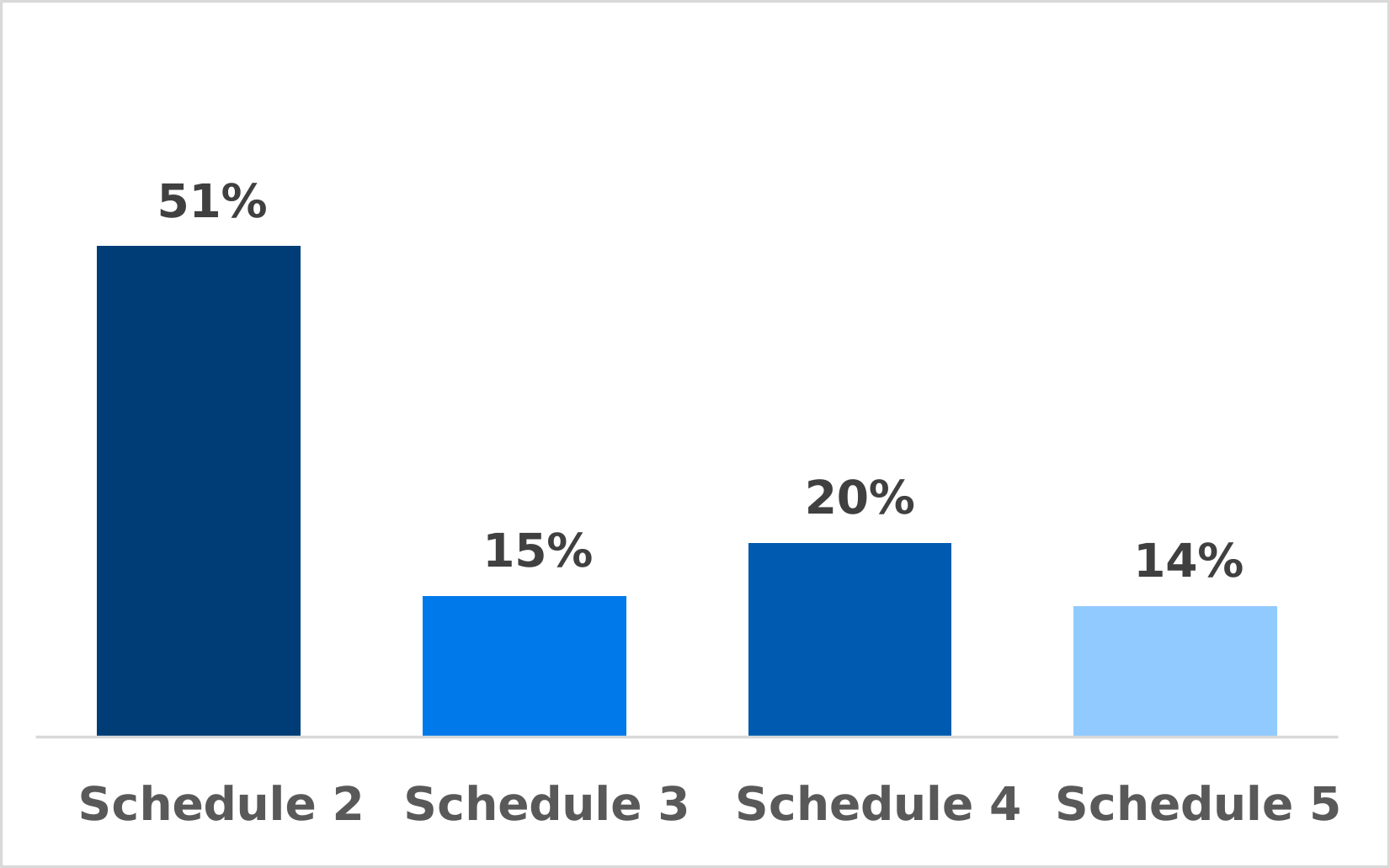
Figure 22: Key reductions in hospital prescribing of controlled drugs for community pharmacy dispensing in 2024
| Controlled drug & Schedule | Percentage change | Total items prescribed in 2024 | Total items prescribed in 2023 |
|---|---|---|---|
| Methadone (Schedule 2) | down by 6% | 235,472 | 249,631 |
| Buprenorphine (Schedule 3) | down by 6% | 107,679 | 114,887 |
| Temazepam (Schedule 3) | down by 6% | 1,651 | 1,752 |
Figure 23: Key increases in hospital prescribing of controlled drugs for community pharmacy dispensing in 2024
| Controlled drug & Schedule | Percentage change | Total items prescribed in 2024 | Total items prescribed in 2023 |
|---|---|---|---|
| Dihydrocodeine (Schedule 5) | up by 29% | 6,951 | 5,393 |
| Oxycodone (Schedule 2) | up by 27% | 5,120 | 4,040 |
| Morphine (Schedule 5) | up by 21% | 24,720 | 20,362 |
| Codeine (Schedule 5) | up by 20% | 52,175 | 43,324 |
| Lisdexamfetamine (Schedule 2) | up by 18% | 59,905 | 50,635 |
| Dexamfetamine (Schedule 2) | up by 14% | 10,547 | 9,228 |
| Methylphenidate (Schedule 2) | up by 12% | 204,395 | 182,071 |
| Co-codamol (Schedule 5) | up by 11% | 52,454 | 47,219 |
| Gabapentin (Schedule 3) | up by 7% | 6,398 | 5,956 |
| Lorazepam (Schedule 4) | up by 6% | 29,566 | 27,793 |
| Co-dydramol (Schedule 5) | up by 6% | 3,408 | 3,207 |
| Tramadol (Schedule 3) | up by 5% | 7,934 | 7,571 |
| Zolpidem (Schedule 4) | up by 1% | 5,409 | 5,371 |
NHS Pharmacy First service
The national NHS Pharmacy First service aims to reduce pressure on primary and urgent care services, including emergency departments and out-of-hours GP services. It does this by referring people to community pharmacies for advice, treatment, and urgent repeat prescriptions, and may supply certain controlled drugs in specific circumstances for a limited period.
Of all controlled drugs supplied in 2024, the majority supplied by Pharmacy First were in Schedule 5. We continue to see increases in the number of controlled drugs supplied through the service. We also see that pharmacists are supplying quantities of controlled drugs that exceed what would be needed for 5 days. This is also something that has been highlighted at many Controlled drug local area networks during the year.
The controlled drugs most commonly supplied by the service in 2024 were:
- co-codamol (in a range of forms, including tablets and capsules) 30/500mg, 15/500mg and 8/500mg
- codeine 15mg and 30mg tablets
- co-dydramol 10/500mg tablets
- clobazam 5mg and 10mg tablets
- clonazepam 500mcg tablets
- diazepam 2mg tablets
- dihydrocodeine 30mg tablets
- morphine sulfate oral solution 10mg/5ml
- testosterone all forms
- zopiclone 7.5mg tablets
Private controlled drug prescribing in independent primary care
The total number of controlled drug items prescribed privately across independent primary care services in 2024 increased by 38%:
- 540,227 items in 2024
- 390,788 items in 2023
Although this is a smaller percentage increase from 2023, (73% increase), it still represents an increase of nearly 150,000 items, which is similar to the increase in number of items in 2023.
As in both 2022 and 2023, this trend is primarily driven by prescribing of Schedule 2 controlled drugs licensed to treat ADHD and could be linked to lack of access to NHS mental health services.
Of all private prescribing of controlled drugs in independent primary care:
- Schedule 2 accounted for 97%
- Schedule 3 accounted for 3%
Private prescribing of Schedule 2 controlled drugs
Prescribing of Schedule 2 controlled drugs alone in 2024 increased by 39%:
- 525,873 total Schedule 2 items in 2024
- 378,049 total Schedule 2 items in 2023
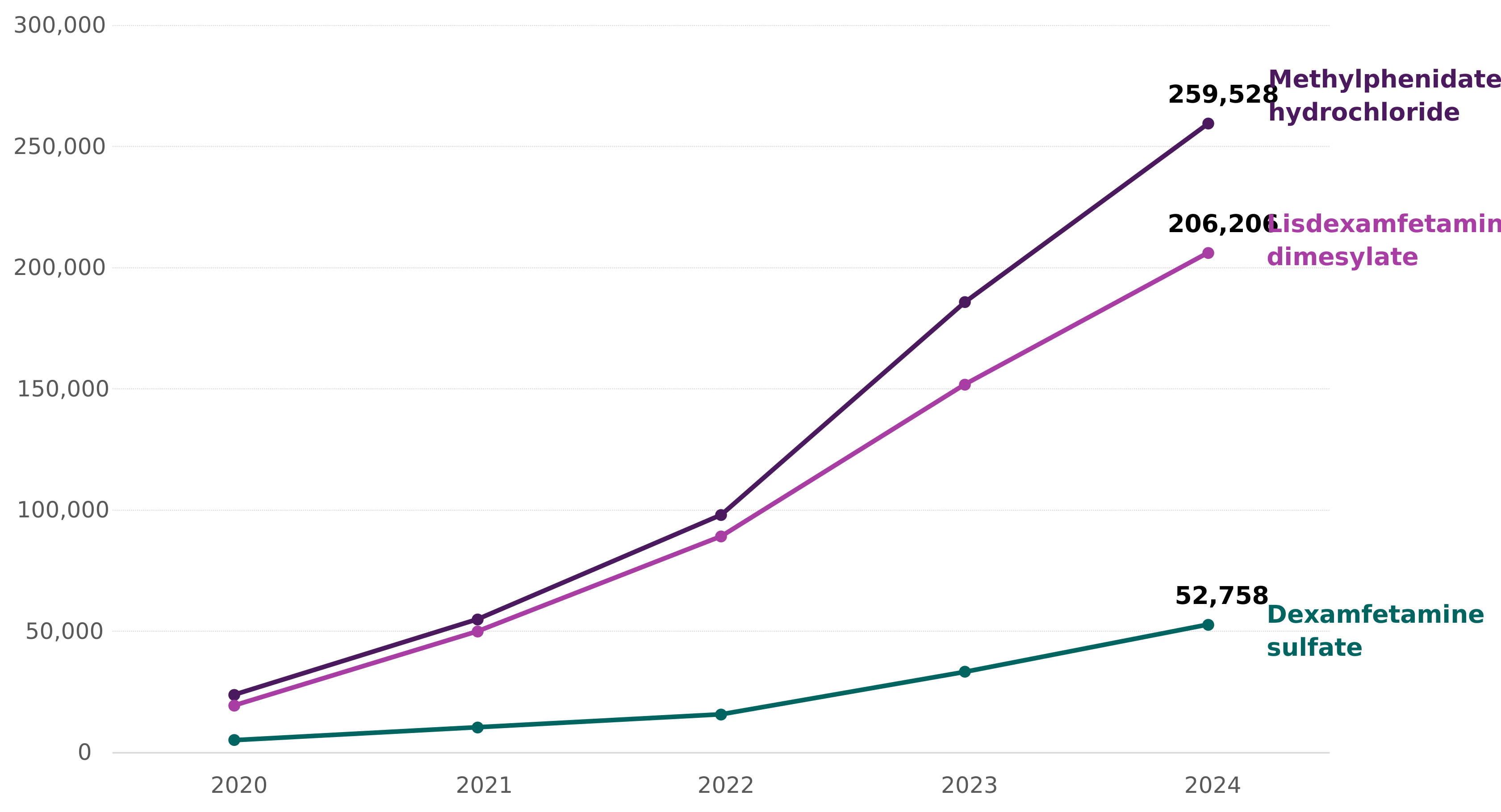
This figure does not include unlicensed cannabis-based products for medicinal use and, as in previous years, has largely been driven by the increase in prescribing for medicines licensed for ADHD (figure 25).
Figure 24: Schedule 2 controlled drugs prescribed in independent primary care in 2024
| Controlled drug | Percentage change | Total items prescribed in 2024 | Total items prescribed in 2023 |
|---|---|---|---|
| Methylphenidate | up by 40% | 259,528 | 185,819 |
| Lisdexamfetamine | up by 36% | 206,206 | 151,827 |
| Dexamfetamine | up by 58% | 52,758 | 33,384 |
Figure 25: Number of items of methylphenidate, lisdexamfetamine and dexamfetamine prescribed annually in independent primary care in England, 2020 to 2024
Private prescribing of Schedule 3 controlled drugs
Prescribing of Schedule 3 controlled drugs in 2024 increased by 14%:
- 14,125 total items prescribed in 2024
- 12,411 total items prescribed in 2023
Pregabalin: this is the most prescribed drug in Schedule 3, accounting for 53% of all Schedule 3 prescribed items in 2024, with prescribing increasing by 8%:
- 7,510 total items in 2024
- 6,922 total items in 2023
Across the most commonly prescribed schedule 3 controlled drugs, we have seen increases in:
- tramadol (up by 33%, 1,642 total items in 2024)
- gabapentin (up by 29%, 1,119 total items in 2024)
- buprenorphine (up by 31%, 2,606 total items in 2024)
- temazepam (up by 18%, 636 total items in 2024)
At the same time, we have also seen a reduction in the prescribing of midazolam hydrochloride (down by 30%, 560 total items in 2024).
Requisitions
Requisitions are documents that allow the appropriate people to order medicines for use in their professional practice, such as ordering a stock of controlled drugs that are later administered to patients.
The volume of requisitions decreased by 18% in 2024:
- 12,896 total items requisitioned in 2024
- 15,739 total items requisitioned in 2023
Looking at where these requisitions came from in 2024:
- 73% of all requisitions were from NHS providers (compared with 74% in 2023)
- 27% were from independent organisations (compared with 26% in 2023)
In 2024, the top 10 controlled drugs on requisition remained similar to the previous year, with methadone replacing tramadol in the list (Figure 26).
Figure 26: Most commonly requisitioned Schedule 2 and 3 controlled drugs in 2024
| Controlled drug | Percentage of all requisitions | Total items in 2024 |
|---|---|---|
| Methylphenidate | 20% | 2,554 |
| Pregabalin | 18% | 2,355 |
| Morphine sulfate (Schedule 2 and 5) | 10% | 1,235 |
| Oxycodone | 8% | 1,074 |
| Buprenorphine | 8% | 994 |
| Midazolam | 8% | 983 |
| Gabapentin | 6% | 773 |
| Fentanyl | 5% | 681 |
| Lisdexamfetamine | 5% | 642 |
| Methadone hydrochloride | 4% | 475 |